How to grow magnolias? A detailed guide to magnolia care and management
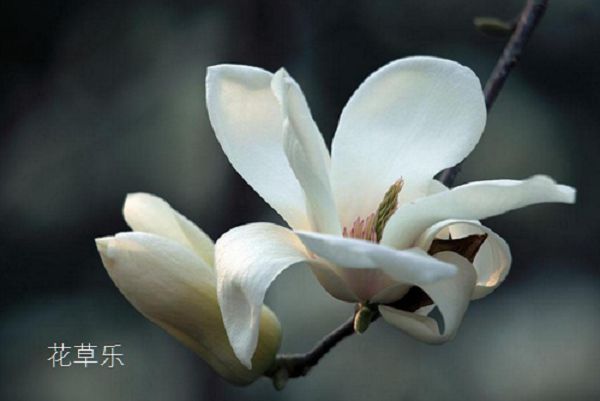
Magnolia is a deciduous tree. It likes warmth and humidity, and is not tolerant of cold or drought. Its fragrance spreads all around, and its flowers are white as jade. The flowers are large, borne singly at the tips of branches, white and fragrant; the sepals and petals are similar, arranged three to a whorl, forming a bell shape. It is a famous ornamental plant and traditional flower in China, and a precious early-spring flowering tree for gardens. There are more than 30 species of the same genus in China, and common varieties include: purple magnolia (Magnolia liliiflora), lotus magnolia (Magnolia grandiflora), Tianmu magnolia (Magnolia amoena), Baohua magnolia (Magnolia zenii), Tiannü flower (Magnolia sieboldii), and Yulan magnolia (Magnolia denudata), etc. What color is the magnolia flower, and when does the magnolia bloom? Below, Flowers and Plants Joy shares with you the care and management of the white magnolia, along with when the white magnolia blooms and the color of its flowers.
I. What color is the magnolia flower
The magnolia flower is white, but there are many varieties of magnolia, with flowers in white, pale purplish red, and cream yellow. Large and fragrant, with a cup-shaped corolla, the flowers open first and the leaves grow afterward, and the flowering period is about 10 days. It is a famous flowering tree in China and an important spring-flowering tree in the south. It is the city flower of Shanghai. The magnolia's shape closely resembles a lotus; when in full bloom, the petals spread out in all directions, making the courtyard dotted with patches of white, dazzlingly bright, with high ornamental value, making it an ideal flower shape for beautifying courtyards. The magnolia not only has high ornamental value, but also has many effects and uses. Magnolia can reduce phlegm, benefit the lungs, and harmonize the qi. It promotes metabolism and whitens the skin. It makes the complexion rosy, the face radiant, the skin smooth and delicate, and delays aging. So the floral meaning of the magnolia is also very beautiful; the floral meaning of the white magnolia is pure love, sincerity, and noble transcendence.
II. When does the magnolia bloom
Magnolia likes light and is relatively cold-tolerant; it can overwinter in the open ground. It prefers a dry environment, and waterlogging at the planting site easily causes root rot. It likes fertile, well-drained, slightly acidic sandy soil, and can also grow in weakly alkaline soil. It is very sensitive to temperature. The white magnolia blooms from March to May, the cinnabar magnolia from April to May, the purple magnolia from April to July, and the round-leaf magnolia around June. In short, the farther south, the earlier the flowering period; in places with higher temperatures, the magnolia's flowering period may even be advanced to December.
III. Magnolia care and management
1. Light
The white magnolia is a sun-loving flower and needs plenty of sunlight. During the growing period, it should be kept on a balcony or in a sunny spot with long hours of sunlight and strong light, especially during the flowering period. It needs no less than 6 hours of light per day. Do not expose it to scorching sun in summer. If the light is insufficient, the white magnolia will only grow leaves and not bloom, or will bloom very little, with slender branches, pale leaf color, thin leaves, and yellowing, withered leaves.
2. Watering
The white magnolia has fleshy roots, so it needs water but also fears waterlogging. Therefore, from early summer to late autumn, water once a day to keep the soil moist. In the rainy spring season, water must not accumulate in the flowerpot, otherwise the roots will rot. In summer, water once each in the morning and evening, and also spray water on the leaves and the ground around the flowerpot to increase air humidity. If the pot soil is found to be compacted and yellowed, apply ferrous sulfate solution or water the roots with 0.7% to 0.8% vinegar water.
3. Fertilizing
The white magnolia has a long flowering period and blooms abundantly, so it likes fertilizer. Only by timely and regular replenishment of nutrients can it bloom more, with larger flowers, more vivid colors, and fragrant scent. From May to October during the flowering period, apply an organic liquid fertilizer mainly of phosphorus and potassium once every 7 days, such as decomposed cake fertilizer water. The principle of fertilizing is to apply thin fertilizer frequently; you can also start with a lighter concentration and then a stronger one. Never apply raw fertilizer, otherwise it will burn the roots. Topdressing before and after flowering is especially important: the former prompts the flowers to bloom fully, while the latter helps with bud formation. The topdressing periods are late February and May.
4. Pruning
Every year between the Spring Equinox and Qingming, choose an overcast or cloudy day to move the white magnolia outdoors. After moving it out, give the potted plant 2 to 3 days to adapt to the outdoor environment before removing the plant's old leaves, keeping only a few tender leaves at the branch tips to encourage new shoots. After each round of flowering, also remove a small number of old leaves to promote new branch growth and flower bud formation.
During the growth period of the white magnolia, also pinch the tips frequently to control apical dominance and encourage more side branches.
After the flowering period and before a large number of buds sprout, cut off diseased and dead branches, overly dense branches, redundant branches, parallel branches, and leggy branches; remove suckers at any time as needed. When pruning, medium and short branches shorter than 15 cm are generally not cut; long branches are cut back to 12 cm to 15 cm. The cut should be smooth and slightly slanted, and the cut should be less than 5 mm from the bud. Because the magnolia's branches and trunk have poor healing ability, apart from absolutely necessary cases, pruning is mostly not carried out.
5. Pest and disease control
The main insect pests of the white magnolia are aphids and scale insects.
For scale insect damage, spray with 0.3% to 0.4% vinegar solution to kill them, or remove them by hand.
Aphids damage tender shoots and flower buds. They can be killed with sumithion, or sprayed with a 500-fold solution of laundry detergent, or you can use a cotton swab dipped in laundry detergent solution to wipe off the pests, then rinse the branches and leaves with clean water.
In the management of the white magnolia, besides paying attention to preventing and controlling chlorosis and root rot, you should also prevent and control anthracnose and underground pests such as white grubs; the stems can also be damaged by longhorn beetles.