How to Deal with a Damp Duck House? A Detailed Guide to Practical Solutions
Ducks love water, so the daily duck house is generally quite damp, because they carry some water into the duck house after going into the water. But a damp duck house is not good either, so everyone can find ways to solve this dampness problem. So how should it be handled? Let's find out below.
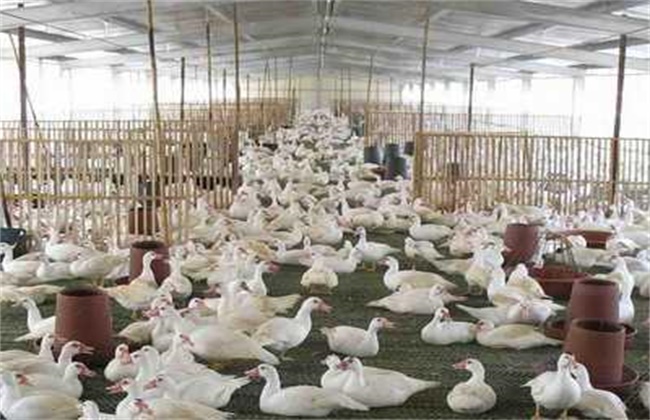
1. Build an isolation net
This is a relatively popular method now, suitable for large-scale farming. Its principle is to build an isolation layer above the floor of the duck house, mainly made of mesh material, so that after the ducks return to the duck house, the water will flow down through the holes, greatly reducing the accumulation of water in the duck house. This kind of isolation layer should be a bit thicker, since the duck density is relatively high, and secondly the holes should not be too large, to avoid injuring the ducks' feet; the contact surface should be smooth, not uneven.
2. Replace the bedding
Alternatively, just change the bedding frequently. Ducks consume bedding relatively quickly; if they go into the water, it should be changed at least once a week, so as to ensure a reduction in moisture. If the duck house is indeed severely damp, you can switch to bedding that does not get wet easily to ease the situation, such as fine sand and the like; these are all relatively effective ways to prevent a damp duck house. If it is straw or similar material, then it needs to be changed much more frequently, because straw gets soaked quickly, but its moisture-retention effect is also decent; after the ducks go into the water, quite a bit of water remains at the bottom, and straw easily becomes damp.
3. Set aside a drainage area
This method is relatively uncommon, because it requires a fairly large site. Set aside a drainage area outside the duck house, where you can place some dry sand or soil and the like. After the ducks come back from the water, do not rush them into the pen; let them range in this area for about an hour, and feed them there at the same time. This way, by the time the ducks finish eating, the moisture on their bodies is almost dry. Finally, drive them back to the duck house with straw bedding and let the ducks spend the night. Doing this can effectively drain the water from the ducks' bodies, prevent the duck house from becoming damp, and also greatly reduce the drop in the ducks' body temperature caused by moisture.
4. Ventilate to remove moisture
This is what most people do, but its effect is relatively less obvious; generally it works better in relatively dry places. Relying on ventilation to remove moisture requires the terrain to be somewhat elevated, so that the wind can blow into the duck house; only then is the dehumidifying effect obvious. In this case, the air inlet should generally be aimed at the part of the duck house interior with heavier moisture, and then let the wind carry the water vapor out along with it, keeping the duck house in a rhythm of relatively fast air circulation, so that it is not easy for it to become damp, because the water vapor cannot stay.
The above are some ways to handle a damp duck house. A duck house is inherently quite damp; all everyone can do is ease the dampness as much as possible, and completely avoiding it is also relatively difficult.