How to Propagate Phlox? A Detailed Guide to Common Propagation Methods
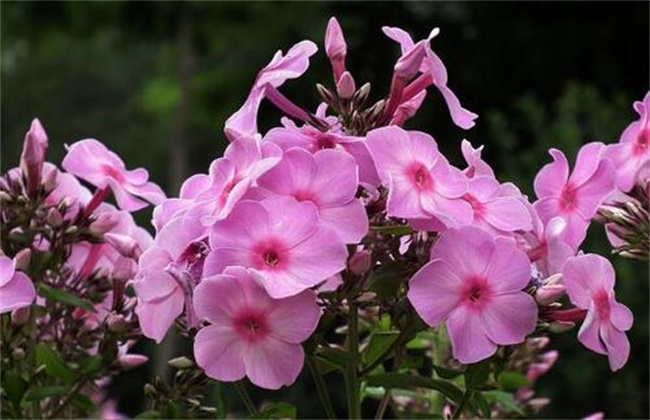
Phlox is native to Mexico and is cultivated in gardens throughout China. It is mostly grown as a potted plant for early spring flower bed displays. Its flowers come in colors such as light red, deep red, purple, white, and light yellow. The colors are vivid, and its ornamental value is relatively high. So, do you know how it is propagated? Let's take a look together below.
1. Division Propagation
Division propagation of phlox is generally carried out in early spring or autumn. The division method is relatively simple to perform and results in rapid survival, but it is not suitable for mass propagation and is generally used for home potted plants. Division propagation takes advantage of phlox's strong ability to produce suckers from its perennial roots and its characteristic of easily sprouting root suckers during growth. The sucker shoots around the mother plant can be dug out and planted separately in a new location. Before long, they become new plants. Note that the sucker shoots should be kept with complete root systems as much as possible to increase the survival rate.
2. Layering Propagation
Layering propagation can be carried out in spring, summer, and autumn -- any season except winter. Layering propagation can be further divided into mound layering and ordinary layering, and you can choose freely according to your needs. For mound layering, soil is piled around the base of the plant in a steamed-bun shape, and after roots form, the layered shoots are separated and planted. For ordinary layering, 1-2 year old branches close to the ground are selected, and their lower portions are completely buried in soil while the upper ends remain exposed above ground. When layering, the portion of the branch buried in the soil should first be scored to encourage rooting. Generally, after about one month, once roots have formed, they can be separated from the mother plant and replanted.
3. Cutting Propagation
Cutting is the most widely used and highest-survival-rate propagation method for phlox. It can be further divided into root cuttings, stem cuttings, and leaf cuttings. First is root cutting propagation, which can be carried out in spring and autumn, often in combination with division planting. First cut some roots into small sections of about 30 cm, bury them flat in sand, keep the ambient temperature between 15-20°C, and maintain soil moisture. In about one month, new shoots will grow. Next is stem cutting propagation, which can be carried out in spring, summer, and autumn, generally after flowering. It is suitable for large-scale production. After flowering, combined with pruning and pinching, take well-developed branches and cut them into 3 to 5 cm long cuttings, insert them into clean, sterile plain sand with a plant and row spacing of 2 to 3 cm, and simply maintain soil moisture. Roots can form in about 30 days. In summer, pay attention to disinfection to prevent the cuttings from rotting. The last method is leaf cutting propagation, generally carried out in summer. Take leaves with axillary buds and a 2 cm long stem, insert them into clean, sterile plain sand, provide shade, and maintain soil moisture. Roots can form in about 30 days.
The above is an introduction to how to propagate phlox. We hope it helps you. If you want to learn more related knowledge, please stay tuned to us.