What are the cultivation methods and precautions for Persian buttercup?
Persian buttercup, also known as Ranunculus asiaticus, is a perennial plant. Its flower colors are rich and varied, and its flowers resemble peonies, but are smaller. Its leaves are somewhat similar to celery leaves, so it is also called celery flower. It is often used as a cut flower or potted plant, so how should Persian buttercup be cultivated? Follow the editor to learn about it.
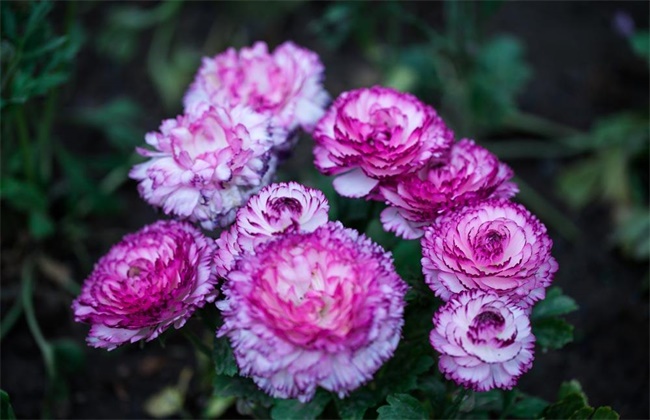
1. Soil environment
Persian buttercup likes sunny environments and cool climates, and is not tolerant of low temperatures. Slight frost damage can occur at 0°C. It grows poorly in high-temperature and high-humidity environments, and is neither tolerant of waterlogging nor of salinity. It grows well in well-drained, fertile, loose sandy loam soil. If grown in pots, garden soil, perlite, and leaf mold can be mixed and prepared. During the cultivation period, the soil should often be kept moist. Do not wait until the soil is too dry before watering, otherwise it will affect flowering and reduce ornamental value.
2. Light and temperature
Persian buttercup is not tolerant of strong light and likes semi-shaded environments. In winter, it can be placed directly in the sun for care, but as temperature and light increase in spring, it should be appropriately shaded and ventilated to ensure normal growth. Persian buttercup likes cool environments. The optimal growth temperature is 17°C during the day and 7°C at night. It should not be too high or too low, and the temperature difference between day and night should not be too large, otherwise it will affect its growth and development, leading to a decline in both the number and quality of flowers.
3. Fertilizer and water management
Persian buttercup likes moist environments but is afraid of waterlogging. Although it is relatively drought-tolerant, it should not be excessively dry, especially in the later growth stage. If it is too dry, it may enter a forced dormant state, resulting in poor bulb quality. In addition, water after planting, pay attention to maintaining balance, and it should not be too dry or too wet. Keep the soil surface dry, but yellowing and withered leaves should not appear. Before planting, apply an appropriate amount of fertilizer as base fertilizer. During the growing period, topdress according to demand. In particular, flowering requires a large amount of nutrients, so fertilizer should be applied during the flowering period.
4. Precautions
During the cultivation of Persian buttercup, if the supply of fertilizer and water is insufficient, or the temperature is too high, or it becomes dormant too early, its small roots will become uneven, withered, and smaller. After summer dormancy, the aboveground plants will wither after 6 months. In northern regions, the root system can be protected to overwinter safely.
The above is an introduction to the cultivation methods and precautions for Persian buttercup. We hope it can help you. To learn more related knowledge, please stay tuned to us.