How to Tell If an Orchid's Roots Have Rot After Planting the Pseudobulb, and What to Do About It
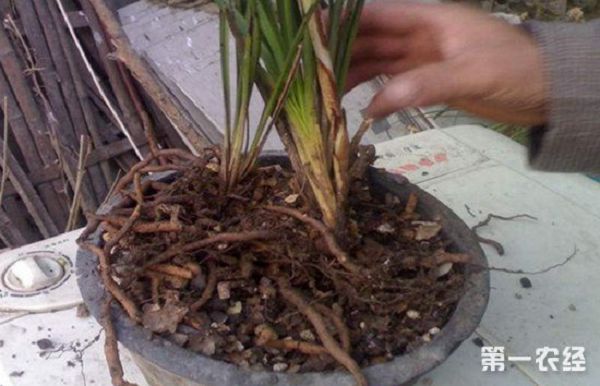
Root rot is a fairly common problem when caring for orchids. If you judge whether the roots have rotted by looking at the leaves, it may already be too late by the time you notice, because with orchids the roots and rhizome usually rot completely before the leaves start to decay. So pay close attention to how the roots are growing day to day, and from time to time you can dig the orchid up to check for blackened areas. If that seems like too much trouble, grow it in a transparent plastic pot or another container that lets you see the condition of the roots.
Growing orchids in transparent pots makes it easier to observe the roots
Rotted orchid roots are not something to fear; what you should fear is a rotted pseudobulb. As long as the rot has not reached the pseudobulb, there is still a chance to save the plant. The most common cause of orchid root rot is improper watering; both waterlogged soil and long periods of drought can keep orchid roots from breathing and cause them to rot.
Whether there is too much water or too little, orchid roots easily have their breathing blocked, which leads to rot. If you catch it in time, simply remove all the rotted parts. Cutting off the rotten roots promptly and controlling watering is the best way to save the plant, and it is also a major rule for preventing orchid root rot.
Often the only way to know whether the roots have rotted is to dig the plant up and check
After trimming away the rotted parts of an orchid's roots, you need to repot it. The old potting soil cannot be used again. When repotting, it is best to disinfect the old pot first, then switch to a new one and use disinfected potting medium. Note that the new medium must drain well. After repotting, place the plant in a shaded, well-ventilated spot for a period of time, and once its roots have recovered their vigor, move it to a sunny spot for normal care.
Rotted orchid roots are not something to fear; as long as the pseudobulb is fine, the plant can be saved. What you should fear most is infection with stem rot. When you find dark spots appearing on the orchid's leaves from the bottom upward, you must immediately dig down to examine the roots. If the pseudobulb is completely black, throw it away, and also cut off and burn all other infected orchid plants and leaves. Keep the affected plants isolated from other healthy orchids to prevent infection and the loss of the entire collection. When repotting, make sure the medium from the lower part of the pseudobulb down to just outside the roots is packed firmly, to keep the pseudobulb from wobbling or rising above the surface of the medium.
Once the leaves have all rotted, the whole pseudobulb is ruined too, and there is no saving it
You should know that when an orchid develops root rot, there is definitely a problem with its care: water, fertilizer, pesticide damage, temperature, environment, and so on. If even one of these goes against the orchid's growth requirements, yellow leaves or root rot can appear. If you cannot identify the problem in time, the orchid will very easily die.
Orchid care requires attentiveness
The above covers the root rot problems most likely to occur while growing orchids and the measures to save them. Those of you already growing orchids should take care to prevent them; best not to wait until the orchid's roots have rotted before dealing with the problem. And those of you planning to grow orchids can learn from this too; it may well come in handy in the future.