Orchid Leaves Turning Yellow: Cause Analysis and Treatment Methods
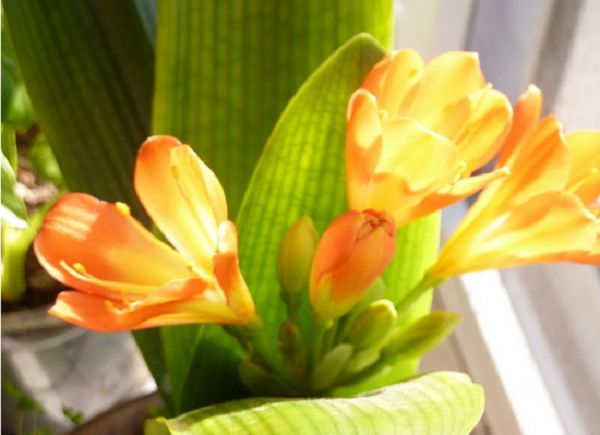
Orchids have very high ornamental value and have been regarded by many people as the best choice for greening a room. However, orchids often develop yellow leaves during growth. What exactly is going on, and how should it be treated? Let us discuss it together below.
Cause analysis and solutions for yellowing orchid leaves:
1. Yellowing orchid leaves caused by overwatering (water yellowing): This is a relatively common situation. Because watering is done without measure, thinking that the more water, the better the orchid grows, water accumulates at the roots and causes waterlogging, which then makes the leaves turn yellow.
Solution: So we should follow the watering requirements and water thoroughly when we do water.
2. Yellowing orchid leaves caused by exposure to strong sunlight (scorch yellowing): Plants with large leaves like orchids are very afraid of strong light. Strong light damages the leaf tissue cells, and then the leaves turn yellow.
Solution: So it is best to place it in a spot with weak light.
3. Yellowing orchid leaves caused by dry air: drought yellowing. Because of long-term failure to water thoroughly or dehydration, although the new leaves keep a normal color, the lower leaves gradually dry, yellow, fall off and age from the bottom upward..
Solution: Water an appropriate amount, and always observe the weather conditions so as to water according to the weather.
4. Yellowing orchid leaves caused by too much fertilization (fertilizer yellowing): Too much fertilization is what is commonly called burning the seedlings. It is extremely unfavorable to the growth of orchids and can easily cause the orchid to die, so fertilization is not better the more the better..
Solution: Apply fertilizer in an appropriate amount, according to the amount.
5. Yellowing orchid leaves caused by long-term lack of fertilizer (nutrient-deficiency yellowing): Nitrogen fertilizer has a very good effect on replenishing the chlorophyll in leaves. If an orchid lacks nitrogen fertilizer, it will also cause the leaves to turn yellow.
Solution: At this time, just apply nitrogen fertilizer moderately.
6. Yellowing orchid leaves caused by pests and diseases: In this situation, carefully observe the yellowing parts of the leaves to see whether there are insects feeding on them or signs of rotting.
Solution: If there are, then pests or diseases have occurred, and the right remedy must be applied for the symptoms.
Tips for caring for orchid leaves:
1. Be single-minded in growing flowers
When I first became fond of growing flowers, I bought whatever I liked, and in the end there were too many to manage. The methods were not appropriate, and nothing could be grown well. Later I understood that to grow flowers well, you should first figure out which type you really like and study it a little. No matter what kind of flower, when grown well and brought into good condition, it looks beautiful. In the end, according to your own preferences, accumulate bit by bit and strive to grow every flower you like well. In fact, a person's life is very limited. Wanting to master everything and pursue perfection in all things is impossible, so we must be single-minded. No matter what we are doing, we must strive to achieve our goals.
2. Growing flowers should follow the laws of nature
Flowers have their own growth patterns, with growth periods and dormant periods. Some flowers grow in spring and autumn and go dormant in summer and winter; some grow in winter and go dormant in summer; some flowers like sun, some suit shade, some love moisture, some are better kept a little dry, and some are afraid of cold while others avoid heat. They must be treated differently. If you like a pot of flowers very much and look at it every day, handle it every day, water it every day, and fertilize it every day, the final result can only be that you harm it. The correct way is to respect its habits, give it a suitable pot, suitable soil, suitable water, suitable fertilizer, suitable sunlight, and suitable temperature, and watch it from neither too close nor too far. It will grow very well. Liu Zongyuan, a famous writer, philosopher, and thinker of the Tang Dynasty, wrote in "The Story of Guo Tuotuo, the Tree Planter": "Follow the nature of the tree, so as to fulfill its nature." This means that if you want a tree to live long and grow luxuriantly, you must pay attention to the tree's natural attributes and let it fully develop according to the needs of its own nature; if you ignore the tree's nature, no amount of care and no amount of worry will be of any use. Many of us now grow flowers (including myself). Although we also care for them in every possible way, we fundamentally do not know what the flowers need, and we water and fertilize completely according to our own whims. All things should follow their natural tendencies. Many people know this principle, yet very few follow it.
3. Growing flowers requires a good mindset.
For an individual, growing flowers should be treated as a hobby in leisure time, not as a career (not including those who open flower shops). Since not everyone can grow flowers well, and even horticulturists may not necessarily grow all flowers well, growing flowers requires a good mindset. Take flowering plants, for example. Even if you have grown them for a long time and they do not bloom, even if the flowers cannot be grown successfully, it does not hurt to grow the leaves instead. These green leaves, after all, also create a good atmosphere. As for me, I generally buy the flowers first. If the flowers fade and they bloom again the next year, of course I am very happy. If they do not bloom, I continue to water them and encourage them to grow leaves. When the leaves grow, I do not remove them but let them stay green in a cluster. I do not seek a riot of color, only lush verdure. Is that not quite good too? After all, this is also my attitude toward my labor, and it makes me feel comfortable when I look at it.
4. Do not apply rigid formulas when growing flowers. All flower-growing techniques should not be applied rigidly, because the same flowers may be planted in the south or in the north, indoors or outdoors. For example, watering: first, it depends on the season and temperature; second, it depends on the type of flowerpot; third, it depends on the flower's growth cycle.