Detailed Key Points for Overwintering Feeding and Management of Laying Ducks
Winter is a hard season for farmers, and for laying ducks it is also a rather difficult period. However, this is also a good time to help laying ducks fatten up, so how should feeding and management be carried out during the overwintering period for laying ducks? Let's find out below!
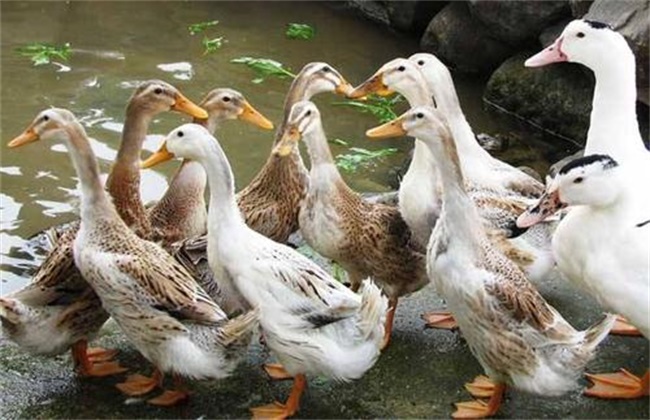
1. Sorting the Duck Flock
The first thing to do, naturally, is to sort the duck flock. After a round of laying, you will find some laying ducks that are not suitable for keeping, and at this time they need to be culled in a concentrated manner. Next are ducks whose egg production has dropped severely or ducks that have been laying for too long; these are all targets that need to be culled when sorting the flock. Sorting the flock at this stage is meant to maintain the high egg production of the flock and keep the ducks at a relatively high level.
2. Improving Warmth Preservation
The improvement of warmth preservation naturally needs no elaboration. Although ducks like water, in winter they will not enter the water; instead, at this time they need to be kept warm. Warmth preservation for the duck flock is mainly reflected in two aspects: one is the room temperature, and the other is contact with the ground. The former can be achieved through various heating devices, while the latter is best achieved by adding bedding material. Only with this double guarantee can the warmth preservation problem for the ducks be greatly improved.
3. Proper Supplementary Feeding
Overwintering ducks are different from those in summer. At this time, in order to resist the cold, the ducks consume nutrients relatively quickly, and since they cannot go outside, they also have no extra food source. At this time, supplementary feeding becomes a very important matter. Supplementary feeding for ducks is mostly concentrated at night, because winter nights are too long. For nighttime supplementary feeding, it is best to use feed with higher nutrition and not focus too much on protein supply. At the same time, some warm water should be reserved for them to consume together, and the lights can be turned off a little later to make it convenient for them to eat.
4. Density Adjustment
Finally, naturally, comes the proper adjustment of density. Everyone knows that winter density needs to be higher, but when adjusting the density, do not increase it too deliberately, because if it is too high, feeding becomes inconvenient. The ducks will huddle together on their own to keep warm. If the ducks are still doing this when eating, then it indicates that the temperature is still too low and the ducks are not active. At this time, you can increase the density a little more and raise the temperature a little more.
The above are the feeding and management techniques for laying ducks during overwintering. Winter is a very good period for fattening laying ducks. If all aspects are done well, then the ducks will have a high egg production period the following year.