What to Do When Clivia Leaves Turn Yellow? Causes and Solutions
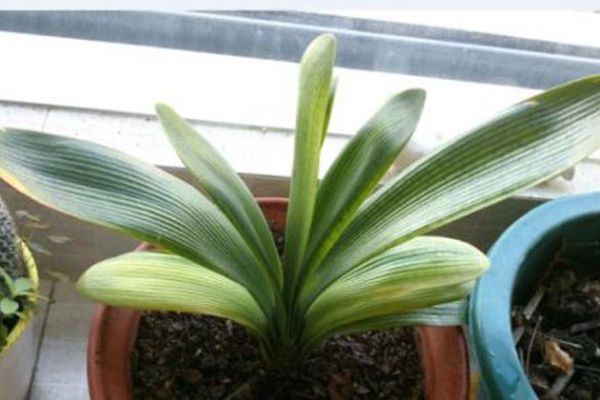
The common causes of yellowing leaves in Clivia are improper lighting, improper watering, excessive fertilizing, and metabolism. Among these, metabolism is a normal growth phenomenon of the plant, mostly shown as the old leaves at the bottom turning yellow and drying out naturally.
Many flower enthusiasts are quite fond of growing Clivia. Although Clivia does not bloom as a seedling and generally needs to be grown for more than two or three years before it can bloom, this still cannot stop people's love for Clivia. This is because Clivia's round and lush green leaves all year round let people see a scene of vitality, and a blooming Clivia is even more irresistible. So when we encounter yellowing leaves while caring for Clivia, what should we do? Today Hua'er Gu will discuss this with everyone.
1. Improper lighting
Clivia exposed to strong light will develop yellowing leaves. Especially in summer, we cannot let Clivia grow in direct sunlight, otherwise it will cause damage from high temperature and strong light. Conversely, if we place it in a dark place for too long to avoid light damage, it will also cause yellowing due to lack of light.
Solution
During periods of high temperature and strong light such as summer, we need to grow Clivia under semi-shade conditions. It needs to enjoy light during growth, but we must also prevent sunburn from the scorching sun. As long as it is in a place with bright and sufficient light, Clivia can fully use light for photosynthesis and promote its own growth. If sunburn or long-term shading causes the leaves to turn yellow, we only need to place it in a well-ventilated, brightly lit place and let it slowly recover.
2. Improper watering
Not watering Clivia for a long time will cause it to lack water, and its leaves will turn yellow and dry out. A Clivia suffering from lack of water has its physiological needs restricted; at least in terms of water, its normal growth needs have already been suppressed. Conversely, if we water irregularly and excessive watering makes the potting soil too moist or causes severe water accumulation, the roots will have difficulty breathing and the leaves will turn yellow.
Solution
When watering Clivia, we must be regular and know the techniques. We must master the watering principle of "water when dry, stop when wet." In this way, it will neither be left without water for a long time nor suffer root rot from water accumulation or overly moist soil. If long-term water accumulation causes root rot in Clivia, we need to take it out of the soil, cut off the rotted roots, disinfect them, and then repot it with fresh soil.
3. Improper fertilizing
Improper fertilizing first refers to yellowing leaves caused by nutrient deficiency due to long-term lack of fertilizing, and second refers to yellowing leaves caused by excessive fertilizing. Long-term lack of fertilizing or using too much nitrogen fertilizer can cause leaf yellowing, while excessive fertilizing can cause fertilizer burn to the roots, leading to leaves drying out and turning yellow due to lack of the water and nutrients needed for growth.
Solution
After any flowering plant has been grown for a long time, the nutrients in the potting soil will be consumed to some extent, and nutrients will also gradually disappear with the flowing water during watering. We can use some fully decomposed homemade cake fertilizer water and organic fertilizer liquid for Clivia. We can also buy some special fertilizer for Clivia. Or before the flowering period, we can use some nitrogen-phosphorus-potassium compound fertilizer, etc., which can make it grow better and bloom more, while also preventing yellowing leaves. If too much fertilizer has been applied, we need to promptly use a large amount of clean water to flush the potting soil. Clean water can dilute the fertilizer liquid in the soil and let it return to normal growth.
4. Metabolism
As Clivia is grown for a longer time, some older leaves will appear at the bottom. These leaves will slowly turn yellow and then wither away. This phenomenon is normal metabolism. At this time, as long as we observe that the newly grown leaves show no abnormalities, there is no need to deal with it. Or we can prune off the old yellowed leaves to make the plant look more attractive.