Detailed guide to orchid planting methods and steps, teaching you how to grow orchids
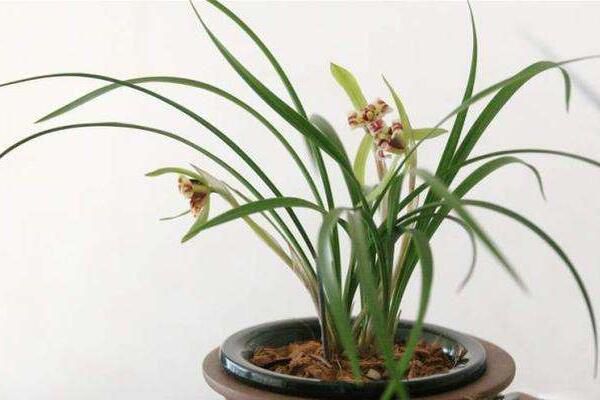
The orchid is one of the top ten famous flowers in our country, and has always been regarded as a symbol of nobility and elegance, and together with plum, bamboo and chrysanthemum it is known as one of the four gentlemen among flowers. However, orchids are not so easy to grow, and many people do not know how to care for orchids. Below, Fortune Tree Home will introduce the orchid planting methods to you.
The planting steps for orchids
Flower pot
When planting orchids, it is best to choose a tall plastic whole-root seedling pot with holes on the sides, which has good breathability and makes scientific watering convenient. Clay has much better breathability than plastic, but never use a glazed ceramic pot, because although it looks good, it is not breathable and does not let water through, and is prone to problems such as root rot.
Potting soil
Cover the hole at the bottom of the pot with clam shells, palm fiber, and the like, then add coarse sand, coal cinder and charcoal in a steamed-bun shape, accounting for about 1/3 of the capacity. Add about 3-5 cm of growing medium on top. When choosing the growing medium, choose larger crushed stones or foam blocks, coarser bricks and stones, and rougher humus soil; never use fine soil.
Planting
Plant the bulb into the soil, at a height so that the top of the bulb is level with the soil surface. Do not plant too deep or too shallow. When covering with soil, be sure to place a slightly larger arched tile or stone over the drainage hole at the bottom of the pot to allow water to drain.
Watering
During the flowering period and the period when leaf buds emerge, orchids should be watered less. During the plum rain season, they should be moved back indoors. In summer, water in the early morning or evening, and not too much either. In autumn, the amount of watering can be gradually increased. In dry seasons, spray every evening. Keep the leaf surface moist and increase air humidity. In short, the principle is to water when dry and keep moist, water thoroughly when completely dry, and keep appropriately on the dry side. Rainwater and spring water are best for watering.
Fertilizing
Fertilizing is one of the more difficult points; not fertilizing is no good, and fertilizing too much is also no good. Generally, when leaf buds newly appear, apply a small amount of dilute fertilizer several times. The best time to fertilize is in the evening, then water once with clear water the next morning. Apply once every 2-3 weeks. Fertilizing according to leaf color is a relatively appropriate method: if the leaves look yellow and thin, it is a lack of fertilizer and topdressing should be applied; if they are black and the leaf tips are scorched, it is too much fertilizer and fertilizing should be stopped.