Why Orchids Do Not Bloom and a Detailed Explanation of Their Blooming Times
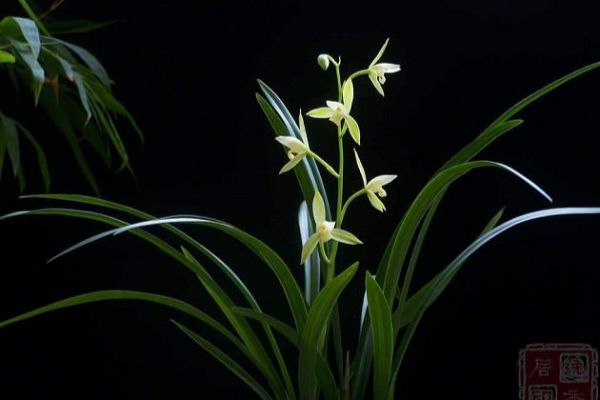
Recently I was chatting with a group of flower enthusiasts, and one of them asked TheNaturePlanet why orchids do not bloom and what causes orchids not to bloom. Then I asked her what kind of orchid she was growing. She said she did not know, and asked: is there not only one kind of orchid? Then I told her that orchids have many varieties. Common orchids include Chunlan (Cymbidium goeringii), Jianlan (Cymbidium ensifolium), Molan (Cymbidium sinense), Hanlan (Cymbidium kanran), Huilan (Cymbidium faberi), and so on, and different varieties bloom at different times.
When do orchids bloom?
Different orchid varieties have different blooming periods. Generally speaking, the blooming period of Chunlan is from January to March, Jianlan from May to October, Molan from December to February of the following year, Hanlan from November to January of the following year, and Huilan from March to May. It can be seen that different orchids have different blooming periods. In addition, there are also various varieties of foreign orchids, whose blooming periods are also not the same.
Since there are so many varieties of orchids, what causes orchids in their blooming period not to bloom? Below, TheNaturePlanet will discuss this question together with everyone.
Why do orchids not bloom?
For an orchid to bloom, many conditions need to be met, and failure to meet any one of them will lead to no blooming or sparse blooming. Common reasons why orchids do not bloom include the following:
1. Insufficient flower age
Many flowering plants need to reach blooming age before they can bloom. Generally speaking, seed-grown seedlings and tissue-cultured seedlings will not bloom easily even after many years of care. Just as some trees need to grow for many years before they bloom and bear fruit, orchids also need a certain age. Generally speaking, an orchid can bloom only from seedling to mature plant, and this time is usually about 2-3 years.
2. Variety differences
Differences in variety and region will also lead to different blooming times for orchids. For example, the differences between the north and south of our country will lead to differences in temperature, light, and the overall environment, so the timing of blooming is also different.
3. Physiological disorder
If the orchid plant cannot effectively grow flower buds during the flower bud differentiation period, it will not bloom, which is commonly seen in physiological growth disorders of orchids. Many sudden situations cause new leaf buds to grow during the flower bud formation period, so the flower buds fail to absorb effective nutrients to promote blooming.
4. Improper cultivation
Sometimes our cultivation methods are unsuitable, which can also cause orchids not to bloom. This is commonly seen in improper watering and improper fertilizing.
Improper watering is mostly due to overwatering, especially overwatering during the flower bud differentiation period, which can cause no blooming. Improper fertilizing is mostly seen when phosphorus and potassium fertilizers are too little and the amount of nitrogen fertilizer is too large. Flower bud differentiation is inhibited. The solution to this problem is to replace it with a flower fertilizer with a reasonable nitrogen, phosphorus, and potassium ratio, or to increase the use of phosphorus and potassium fertilizers.