What is the best season to fertilize orchids?
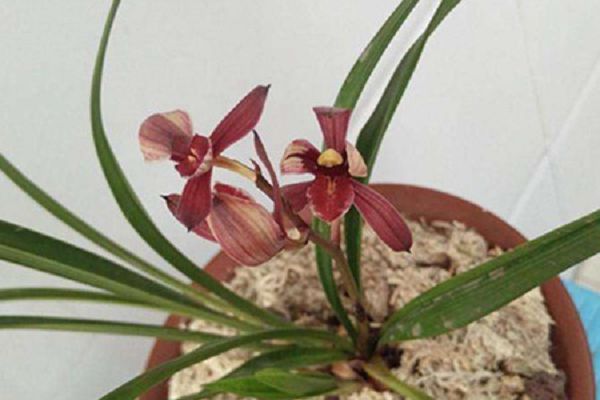
Orchids are best fertilized in spring and autumn. Neither the high-temperature nor the low-temperature season is suitable for fertilizing. The fertilizer applied in spring is a bud-promoting fertilizer, which has a great influence on the whole year's growth. The fertilizer applied in autumn can promote flower buds and strengthen the plants. When fertilizing, pay attention to the concentration and the water quality, and try not to use non-water-soluble fertilizers; also note that foliar fertilizer should be applied to the undersides of the leaves as much as possible.
I. The best season
Generally speaking, orchids are mainly fertilized when they are growing very fast. Specifically, this means spring and autumn. Summer is an exception, because the temperature is too high and fertilizing is not suitable. In winter, with the low temperatures, the plants basically do not grow, so there is little demand either. However, the fertilizers needed in these two seasons are different. What is applied in spring is a bud-promoting fertilizer. The fertilizer applied in this season is the most important, and it affects the growth condition for the whole year. What is applied in autumn is different: it is a fertilizer for promoting flower buds and strengthening the plants. With timely fertilizing, orchids will grow well and bloom abundantly and beautifully.
II. Points to note
1. When it comes to fertilizing, the most important point is the concentration. Like other plants, orchids do not like fertilizer that is too strong. In addition, if water is to be added for dilution, the water quality is also very important. It must be clean water and must not contain impurities. Moreover, if tap water is used, it should first be left to stand for a day, and used only after the chlorine has dissipated.
2. The type of fertilizer should also be noted: non-water-soluble ones cannot be used.
3. If it is a foliar fertilizer, then pay attention to where it is sprayed. The stomata are the parts through which the plant connects with the outside world. The stomata on orchid leaves are distributed unevenly, with about 85 percent on the underside and only about 15 percent on the upper side. Therefore, when fertilizing, more should be applied to the undersides as well.