Detailed Key Points for Bloodworm Culture, Master All Methods and Techniques
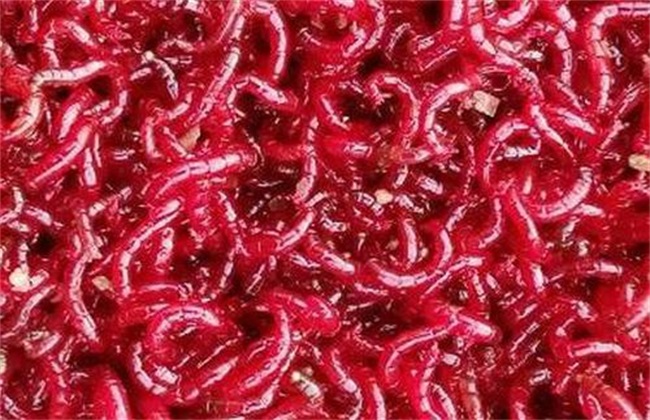
Bloodworms account for a large proportion of aquaculture feed and are a high-quality feed choice for many people. Bloodworm culture itself is quite particular; being extremely small and fragile, they are easily stimulated by foreign matter and die, which makes it hard to scale up production. This is why people rarely find large-scale bloodworm colonies in the wild. Below are several key points for bloodworm culture to help everyone increase production!
1. Light
Bloodworms themselves are very sensitive to light sources and have a strong phototaxis; when the light duration is long, bloodworms perform better in all respects. However, the light here generally refers to soft light, not putting them directly under the sun to collect light, as bloodworms definitely cannot withstand that. The breeding site should have bright light during the day, and at night prepare light bulbs so that bloodworms can enjoy light most of the time. This is a relatively important point, because it noticeably improves breeding efficiency.
2. Water Source Quality
Water is the source of life for bloodworms, because their survival is inseparable from water, and various foods also rely on water to dissolve them for easier feeding. But the contradictory part is that bloodworms like somewhat fertilized water, yet they also like purer water sources; fertilized water easily fattens them up, while purity helps increase their survival rate, so controlling water source quality requires farmers to pay more attention. You can regularly add some organic fertilizer to the water to fertilize it, while ensuring the flow of the water source, to coordinate the water quality; this way it is relatively more balanced.
3. Feeding Adjustment
Feeding is a place where problems easily arise, because the feeding time for bloodworms differs from that of other species; bloodworms are generally fed only once every 2-3 days. The feeding time must be adjusted according to the growth condition of the bloodworms; too frequent feeding will make the water too fertile and cause bloodworms to be uncomfortable, ultimately leading to mass death. Bloodworm feed is generally some animal manure mixed and fermented, then mixed with water and applied to the bloodworms, so this kind of situation is extremely easy to occur, and feeding must be adjusted promptly.
4. Environmental Temperature
Bloodworms are extremely sensitive to temperature, one being the external temperature and the other being the water source temperature; the effects of both act directly on the bloodworms. The water in bloodworm culture ponds is very shallow, generally only a few cm deep. If the temperature of water flowing in from outside differs greatly from the original pond water temperature, it will cause mass death of bloodworms. Secondly, imbalanced external temperature and large day-night temperature differences will also cause this situation, so temperature control is also a key point.
The above are some key points for bloodworm culture. Raising bloodworms requires great attention to these key points, because bloodworms are too small; many things that are not very noticeable to people may still have a major impact on bloodworms.