What are the key points of Muscovy duck farming? A detailed explanation of scientific feeding and management methods
Farming Muscovy ducks is relatively simple, and everyone can easily pick up the techniques, but raising Muscovy ducks well and making your ducks more competitive is not so simple. Here we have summarized some of the core techniques of high-quality duck farmers, to see which farming key points they value that enable them to raise ducks that are both large and fat.
1. Temperature for ducklings
The first thing everyone should care about is the temperature during the duckling stage. Do not underestimate this point; the later fattening speed and maximum growth level of Muscovy ducks are related to it. The reason some farmers' Muscovy ducks rarely get sick is that they control this temperature very well, allowing the Muscovy ducks to smoothly pass through the weak duckling stage. In terms of time, the temperature during the duckling stage should be controlled at around 30-22°C, decreasing week by week. After one month, the temperature control can be gradually reduced, letting the Muscovy ducks slowly adapt to natural temperature changes, until no temperature control is needed.
2. Time for ducklings to enter the water
The time for ducklings to enter the water also requires careful attention. If they enter the water too early, the ducks are prone to catching cold, which leads to poorer constitution and, in severe cases, directly triggers disease. If they enter the water too late, the farming time is increased and the feeding cost rises. After entering the water, Muscovy ducks will gradually enter a rapid growth period, and their growth speed will noticeably increase. This time is generally around 20-30 days, depending on the temperature conditions in each place. The initial water entry is generally around 1-2 hours, letting the Muscovy ducks adapt first; after 3-5 days, there is no need to worry about how long they stay in the water. If the temperature is on the high side, let them enter the water earlier; if the temperature is on the low side, appropriately delay it, so the Muscovy ducks are in better condition to adapt to the external farming life.
3. Balanced feeding for adult ducks
The feeding of Muscovy ducks also requires great attention. Muscovy ducks have a relatively large feed intake, so they digest relatively quickly. If they are fed only a single type of feed or things like rice, it can easily lead to poor digestion. The diet of Muscovy ducks is generally around 7:2:1, that is, 7 parts feed, 2 parts forage grass, and 1 part other things such as insects. It is also possible to feed feed or cooked rice at each meal, then not feed them full, and appropriately feed some forage grass; this is also acceptable. Forage grass generally must be fed once every 1-2 days, while insects, small fish and small shrimp, and the like can be given once every 3-5 days; only in this way is the fattening effect on Muscovy ducks better.
4. Supplementary feeding during free-range raising
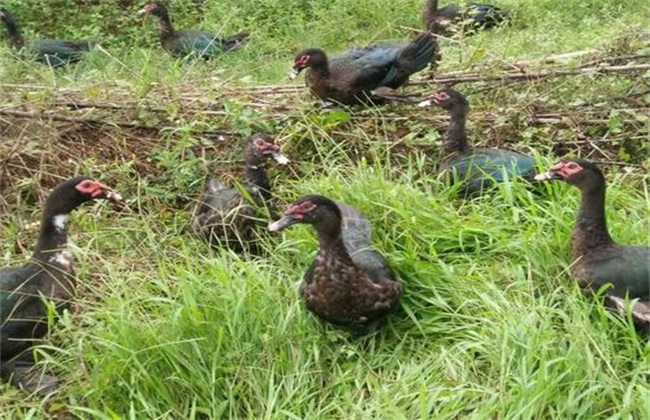
The free-range period is a good opportunity, and farmers must not miss this time. In addition to letting Muscovy ducks move around more, free-range raising also lets them naturally forage in the wild, supplementing some of the foods they lack themselves and allowing them to grow better. You can put some small fish and small shrimp, and the like, into the free-range area, letting the Muscovy ducks naturally catch and eat them, which both increases their nutrient intake and makes the Muscovy duck meat better. Second, choose places with lush aquatic plants, so the Muscovy ducks will also eat some forage grass and the like on their own. Making full use of this free-range stage is a shortcut for everyone to quickly fatten the Muscovy ducks they raise.
The above are some key points of farming Muscovy ducks. Other people's Muscovy ducks are raised well because they have grasped these key points. Everyone should not be envious anymore; if you do these well, the ones you raise will not be much worse.