What risks in fragrant pig farming need attention?
The fragrant pig is a small pig breed that falls into the higher-demand category, following a mid-to-high-end route and differing from ordinary white pigs. Naturally, raising fragrant pigs also yields relatively higher profits, but its risks are equally high. So what risks are there in raising fragrant pigs?
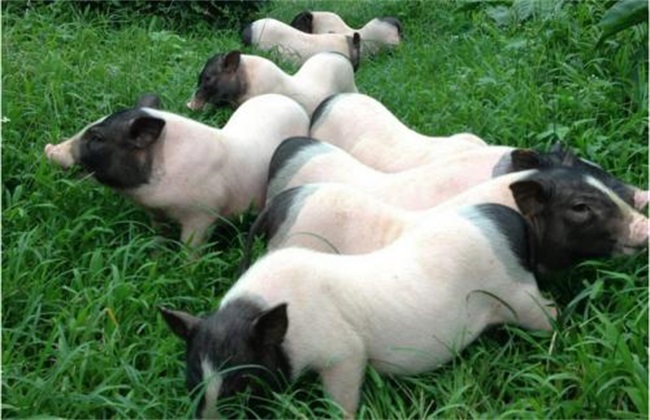
1. Transportation problems
The first is naturally the transportation issue, which is also one of the problems farmers worry about most. Buying breeding stock requires transport, and selling requires transport, and both of these are crucial. Fragrant pigs themselves are not well suited to long-distance transport, because their small size means they have relatively low resistance in this regard and are very prone to problems. Add to that the fact that care for fragrant pigs during transport is not so thorough, and the chances of problems arising increase even more. Quite a few people have suffered losses from this, and it is one of the common farming risks.
2. Quality breeding stock is hard to find
There are a great many varieties of fragrant pigs on the market, and there are quite a few high-quality varieties. All kinds of high-quality purebred fragrant pigs are in a state of “hard to find even one pig,” and many people have turned their attention to this, mixing in some similar pigs to fetch a high price. The various methods for identifying fragrant pigs themselves are not very well developed, and market regulation is not very complete either, leading to many people suffering losses. Besides competing with fellow farmers for scarce high-quality fragrant pig piglets, once they get them, farmers also have to match wits with merchants to avoid being cheated. Many farmers have surely experienced losses in this regard firsthand.
3. Stress reactions
Although the fragrant pig's adaptability is not bad, that does not mean it is highly adaptable, and stress reactions are also a problem extremely prone to occurring when raising fragrant pigs at present. Some are due to not adapting to the local environment and recover after a few days; some are due to having just been transported to the site and recover under careful feeding; these are relatively ideal situations. But some directly affect fattening results, leading to pigs that never fatten no matter how they are raised, and some may even lead to death. So when raising fragrant pigs, give more consideration to stress-related factors and see how to avoid this risk.
4. Market changes
The market for fragrant pigs fluctuates relatively unstably, and price fluctuations are also quite obvious. This is also the main risk of raising fragrant pigs, because the reaction time of this fluctuation is generally relatively long. If a low-price fluctuation occurs when the pigs are ready for market, farmers may lose money; if they do not sell, they cannot bear the farming costs; and being stuck holding them for a long time will also affect subsequent farming plans. Before farming, learn more about markets in various places, look at farming data from previous years, and pick a good time to sell!
The above are some of the risks that must be faced when raising fragrant pigs. Although raising fragrant pigs is fairly profitable, these risks are equally high. Farming risks are inevitable; everyone just needs to be clear about which risks are the biggest.