How to grow Aglaia odorata? Eight methods to teach you to grow it well
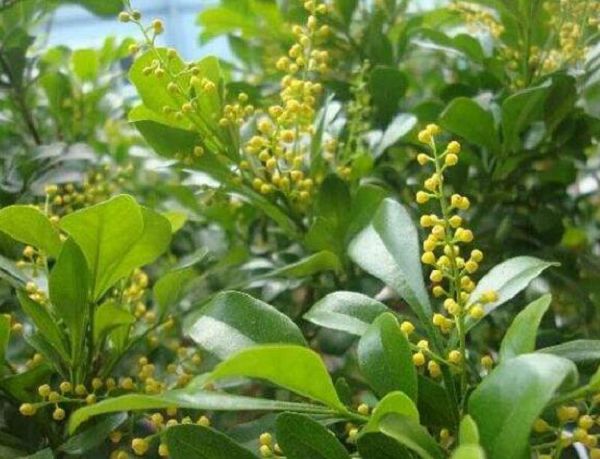
Aglaia odorata (mock lime) is a flowering plant that everyone likes very much, with very high ornamental value. Especially when the flowering season comes, you can smell bursts of fragrance from afar, making people fascinated and enchanted. Many flower lovers like to grow Aglaia odorata, but some beginners do not know how to start. So how do you grow Aglaia odorata? Below, the editor will talk about the cultivation methods of Aglaia odorata, hoping to help you.
Cultivation methods of Aglaia odorata
1. Soil
Aglaia odorata likes to grow in slightly acidic soil, and the most suitable is culture soil mainly composed of leaf mold.
2. Temperature
Aglaia odorata is relatively not cold-tolerant. If the temperature reaches below zero, it will die directly. If the temperature is 16°C, the plant can grow, but very slowly, and it is not easy to bloom. The most suitable growth temperature for Aglaia odorata is around 25°C, so this temperature must be maintained during cultivation.
3. Light
Aglaia odorata likes to grow in sunlight, so it should receive as much sunlight as possible. For example, it needs no less than 8 hours of exposure per day, and it also needs to be placed in a relatively ventilated and light-transmitting environment, with appropriate shading in summer.
4. Watering
Aglaia odorata is a water-loving plant, and under normal circumstances the pot soil should be kept moist. In summer, water once a day, and at the same time spray the leaf surface with water to keep the pot soil moist and the air humid. In winter, watering should be reduced.
5. Fertilizing
In addition to the nutrients supplied by the pot soil, Aglaia odorata also needs fertilizing. Because Aglaia odorata blooms relatively abundantly, its demand for water is relatively large, and reasonable fertilizing lets the plant grow healthily. In spring and summer, in order to promote flower bud formation and more blooming, it is usually mainly sprayed with a thin liquid fertilizer containing nitrogen and phosphorus.
6. Pruning
When the plant grows to a certain stage, in order to maintain a good shape, excessively dense branches and leaves can be properly pruned away. At the same time, in order to promote more blooming, dead branches and crossing branches can also be cut off for ventilation and light transmission, so as to promote more blooming.
7. Repotting
When Aglaia odorata has grown for two years, it needs to be repotted. At this time, repotting can be done according to the ambient temperature, generally around March. Also note that after Aglaia odorata is moved outdoors for maintenance for one week, it can be repotted.
8. Propagation
Aglaia odorata propagation usually uses cuttings propagation and air layering propagation. Among them, cuttings include old-branch cuttings and tender-branch cuttings. The former uses old branches from the previous year as cuttings, while the latter selects semi-lignified branches from the current year.