Key Technical Points and Daily Management Methods for Sand-burrowing Insect Farming
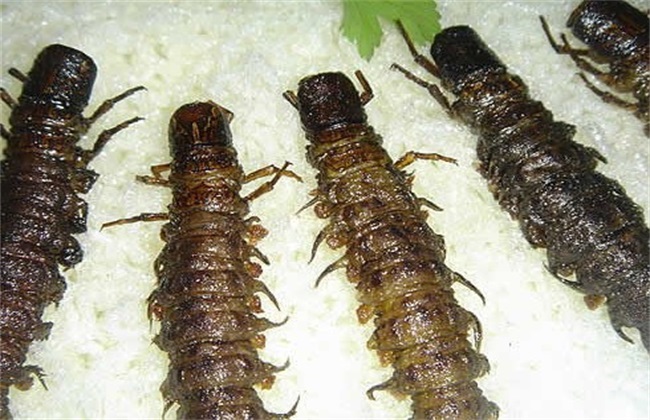
The sand-burrowing insect, also called the water centipede, is a medicinal insect and also a food ingredient, and it can be found in many places in the south. Nowadays the sand-burrowing insect is a rare commodity with extremely high farming value, and many people are rushing to farm it, so how should the sand-burrowing insect be farmed? Let's learn about its farming techniques below!
1. Building the Farming Pond
The sand-burrowing insect is an amphibious type, active mostly by the water in daily life, but it can also survive on land. When building the farming pond, this aspect must be taken into consideration: there must be both an aquatic zone and a terrestrial zone. The terrestrial zone is mainly made of river sand and the like, while the aquatic zone is built with pebbles or stones from the water, and then water is added. The two must be easy to crawl between, and the contact area should be sloped to make it easy for the sand-burrowing insect to crawl. The size of the farming pond depends on the site, generally around 2*4 m; the main thing is that it must be long, because it needs to be divided into two activity areas.
2. Improving the Facilities
After the farming pond is built, other equipment must continue to be improved. One is the underwater water pipes, because the water source needs to be regulated frequently, with water led in on one side and drained out on the other. Secondly, the sand-burrowing insect loves to move around and may crawl out of the farming pond, and also to resist external harm, so an insect-proof net needs to be prepared. Because the water in the farming pond does not circulate, but the sand-burrowing insect consumes a relatively large amount of oxygen, some oxygenation equipment should be prepared as needed.
3. Stocking and Feeding
When all of the above is ready, farming can begin. Put the prepared larvae into the farming pond, and after putting them in, do not rush to feed them; wait a few hours to let them first adapt to the environment and find their own habitat. The sand-burrowing insect is relatively quiet during the day, and night is the peak feeding period, so feeding a small amount during the day is enough, and mainly feed more at night; these grow fast. Yellow mealworms, small minced fish and shrimp, and the like are all food for the sand-burrowing insect, mainly carnivorous, and it must be fresh.
4. Daily Management
The daily management of the sand-burrowing insect is very easy; it itself has fairly strong survival ability, and diseases are relatively few, so the main effort should be put into maintaining a healthy environment for them. In daily life, check the water quality frequently, because the water quality where the sand-burrowing insect lives deteriorates rather quickly, especially when it does not circulate. Secondly, the residue of the fed food must be cleaned up frequently, otherwise after rotting it can very easily pollute the water quality. Water is generally changed about once every 3 days, so that the water source will be relatively clean, which is good for the growth of the sand-burrowing insect.
The above is the farming technique for the sand-burrowing insect. In fact, the sand-burrowing insect is very easy to farm, so everyone does not need to worry too much about it being difficult to farm. However, before farming this, it is still better to learn more about the local market conditions, and then decide whether to farm it or not.