What are the key points of sand-burrowing worm farming techniques?
When farming sand-burrowing worms, there are quite a few issues to pay attention to so that the farming results are good. Many novice farmers may not know much about sand-burrowing worms, and these key farming points are also easy to overlook. Let's take a look at what they are below!
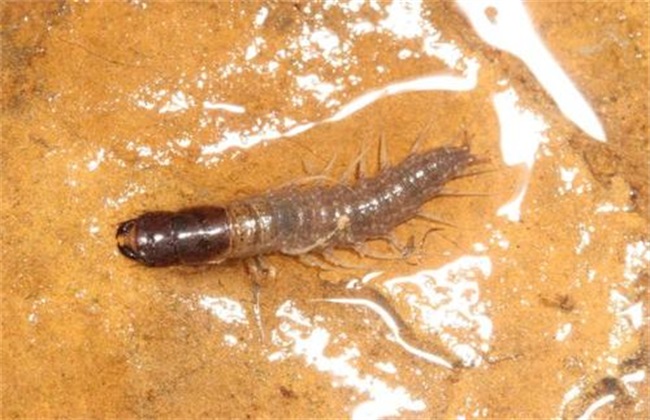
1. Temperature
First, of course, is temperature. When farming sand-burrowing worms, water temperature has a great influence on them. The water temperature requirements of larvae and adults can be said to be on completely different levels. Sand-burrowing worms are fairly resistant to low temperatures, so the water temperature of the farming pond should differ as little as possible from the water temperature used when transporting the seedlings. Large fluctuations in temperature will cause sand-burrowing worms to die. If the water temperature during transport is about 4°C, then the pond temperature should be around 2-6°C.
2. Density
Sand-burrowing worms have no so-called sense of their own kind, and anything smaller than them can easily be treated as food. Therefore, special attention must be paid to farming density, especially when restocking, because if the density is too high, mutual cannibalism can easily occur. Sand-burrowing worms themselves exhibit the behavior of large worms eating small worms. When farming, first divide them into groups by size, then calculate the density. This gives a relatively guaranteed level of safety, and density must be controlled well.
3. Water quality
Water quality is the living environment of sand-burrowing worms, so this is also a point that requires considerable attention. The quality of the water directly affects the growth process of sand-burrowing worms. The water depth is generally about half a meter, and the water quality needs to be somewhat fresh. Sand-burrowing worms themselves also move around in the water. If the water quality is poor, they will choose to flee the water surface, and their feeding will also decrease. In addition, fresh water sources have more oxygen. In such an environment, sand-burrowing worms are more active and grow better.
4. Hygiene
Sand-burrowing worms are fairly particular about hygiene, and both hygiene in the water and hygiene on land need attention. One is that the excrement of sand-burrowing worms pollutes the water source, and the other is that food residue pollutes the terrestrial environment. Food residue in particular is quite obvious. If it is not cleaned up in time, it will rot and thereby disrupt the ecological balance and breed all kinds of bacteria. If this goes on for a long time, it can also easily cause sand-burrowing worms to be infected by various diseases, so this is also a key point.
The above are some of the key points for farming sand-burrowing worms. Everyone can consider these factors more. Although sand-burrowing worms are relatively easy to keep alive, problems are still likely to arise if these issues are not paid attention to.