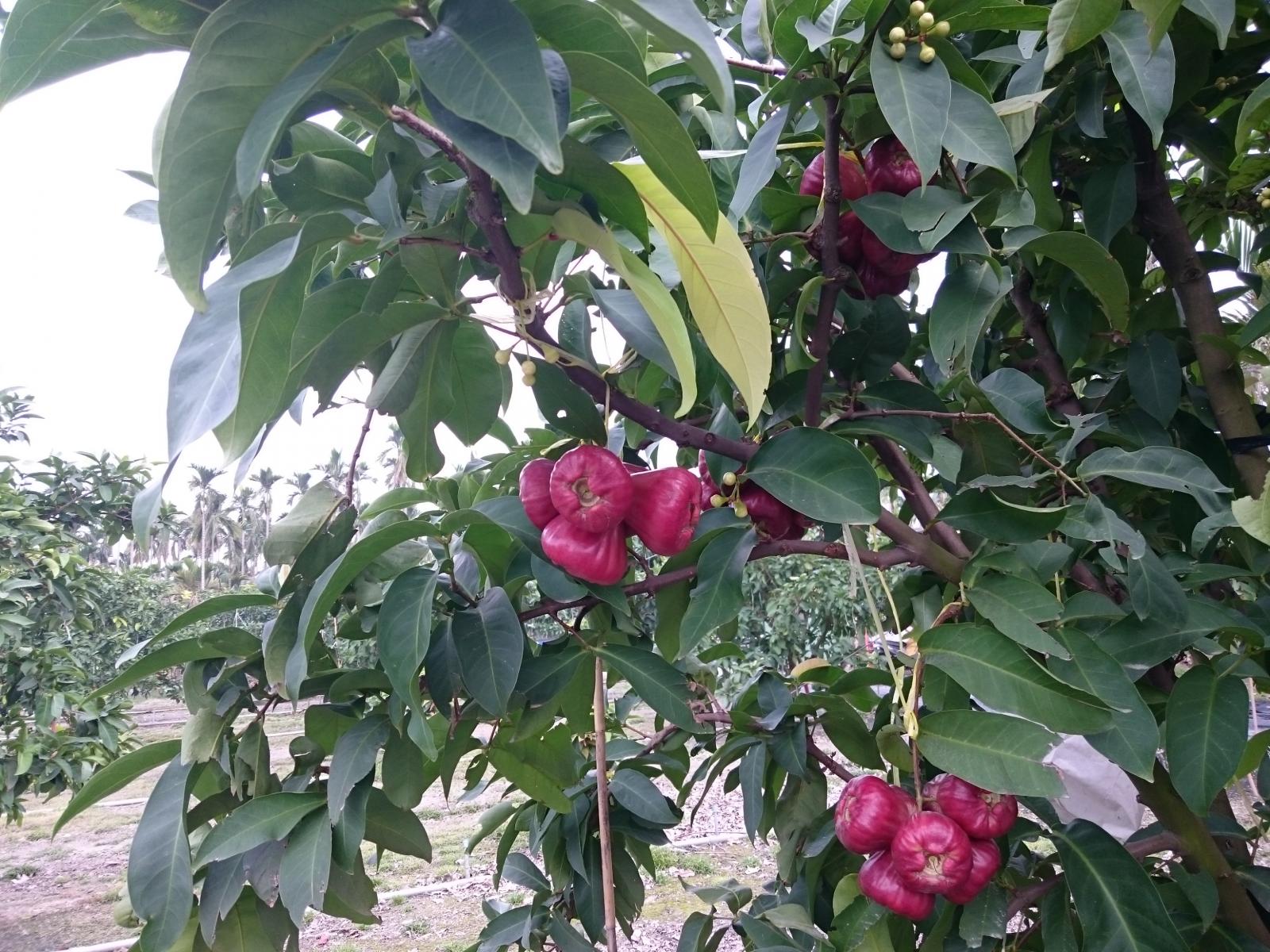
Taiwan wax apple growing habits: adaptability to temperature and price per jin
We all know about the Taiwan wax apple. This fruit is very famous. But did you know? This fruit is very afraid of freezing weather. What effects does freezing weather have on the wax apple?
Days of low temperatures have frozen many people beyond endurance, and have also left wax apple farmers deeply worried. In the past two years, Taiwan's wax apple exports have increased 6-fold, but the delicate wax apple is afraid of both cold and wind. In 2012, the total harvested area of wax apples across Taiwan was about 5,000 hectares, but due to extreme weather, it fell to 3,500 hectares last year, and total output was only 60% of that 5 years earlier. Add to that the high cost of cultivation and management, which requires intensive labor input, and although market demand is large, many wax apple farmers are still seeking other ways out, switching to growing mangoes, which fetch a decent price. No bottom to this downward trend is yet in sight.
The wax apple is an important industry in Kaohsiung and Pingtung. In 2012, wax apple exports were about 4 hundred tonnes. In the past two years, they surged to 2,900 metric tonnes, with demand increasing 6-fold, of which as much as 96% was sold to China.
Lai Rongmao, associate researcher at the Kaohsiung District Agricultural Improvement Station, said that Taiwan wax apples are currently quite popular in China. Unlike other agricultural products, wax apples have no processing value and are mostly eaten fresh, so being able to have a sales outlet directly after harvest is very important. Although export volume is less than 10% of total output, the export price is fairly good and still provides some help to farmers' income.
But many farmers can see this industry prosperity without being able to enjoy it. In 2016, during Typhoon Meranti, as much as 40% of the wax apple trees in the wax apple orchard run by Yu Changyou, a farmer in Jiadong, Pingtung, were blown down, and many trees were even uprooted. "Replanting seedlings and waiting until stable harvest takes 5 years, and even the fastest recovery from wind damage takes 3 years."
He said with a sigh that wax apples are not like vegetables; the time and investment cost is long, and under extremely unstable weather the risks are even higher. Although after the disaster he still insisted on running his wax apple business, many of his peers could not endure gambling against typhoons and gave up long ago.
According to statistics from the Council of Agriculture, in 2012 the total harvested area of wax apples across Taiwan was about 5,000 hectares, falling to 3,500 hectares last year, and total output dropped from 80,000 tonnes to 50,000 tonnes, only 60% of that 5 years earlier. As for price, it currently ranges from 10 to 30 yuan.
"At the worst, I have heard of fruit farmers receiving disaster compensation payments 4 or 5 times in 5 years." Lai Rongmao said that unstable climate directly affects farmers' harvests, and some wax apple farmers cannot bear the losses, leading to a wave of abandonment.
Director Li Wenli of the Fengshan Branch of the Taiwan Agricultural Research Institute observed that mango prices have been good in recent years, and mangoes are also exported to Japan and China. Many wax apple farmers in Fangliao, Pingtung, have switched to growing mangoes. Mango orchards are easier to manage than wax apple orchards, and it is estimated that wax apple farmers may continue the trend of switching crops in the future.
Wax apple cultivation and management are not easy; only wax apple trees that escape natural disasters can bear fruit abundantly.
Not only typhoons: wax apples are afraid of cold and there is also a labor shortage.Besides being afraid of wind, once the weather turns cold the skin of wax apples easily develops pits, and they also easily drop fruit before ripening, losing their commercial value. And if the rain is too heavy and humidity too high, wax apples are also prone to disease.
Another reason for abandoning cultivation is the aging of rural areas. Lai Rongmao said that wax apple management requires intensive labor input, and the places where wax apples are grown are mostly in Pingtung, accounting for 70% of the entire wax apple industry. When older farmers retire and there is no second generation to take over, this directly affects the wax apple industry.
Lai Rongmao added that recently he has also heard of distributors wanting to enter the production end and establish wax apple demonstration orchards to stabilize production and marketing supply, which may be another new development for the wax apple industry.
Finding new varieties and improving cultivation habits
In order to revitalize the wax apple industry, the Kaohsiung District Agricultural Improvement Station has put considerable effort into adjusting the constitution of wax apple trees, such as improving the efficiency of photosynthesis through tree-shape adjustment, thereby strengthening the tree body and accelerating the recovery ability of wax apple trees after damage. Recently, when cold air masses have struck, orchards can also pump groundwater to help keep wax apple trees warm.
In 2014, the Fengshan Branch of the Taiwan Agricultural Research Institute developed a new wax apple variety, "Taiwan Agricultural No. 3", with an appealing deep red color, higher sweetness and larger size. A single fruit can reach 200 grams or even 300 grams. It is also known as "Brown Sugar Barbie". Most importantly, it is less afraid of cold.
The Fengshan Station pointed out that Brown Sugar Barbie has a high rate of good fruit in winter, spring and summer, and the peel color is less likely to be affected by low temperatures. Its shape, color and quality are all excellent, meeting the specifications required for Taiwan's premium gift boxes, and it is quite suitable for holiday gifting.
Li Wenli explained that currently the areas growing Brown Sugar Barbie across Taiwan are Liugui in Kaohsiung and Jiadong in Pingtung, with a total planting area of about 40 to 50 hectares. Output is very scarce, and it has once fetched 1,000 yuan per kilogram at auction. In the future, new varieties will continue to be promoted to increase the competitiveness of the wax apple industry.