How to propagate Phalaenopsis orchids from flower spikes by cuttings? Detailed methods and steps
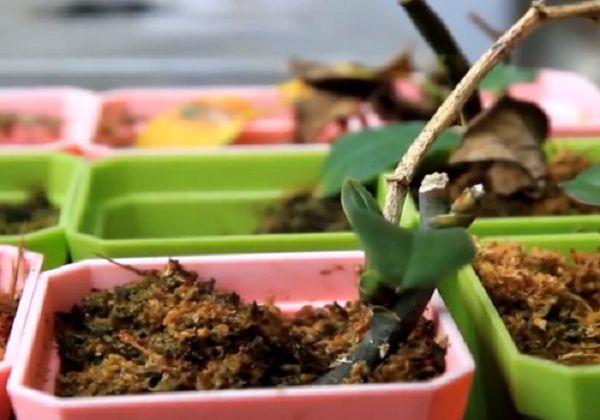
There are many flowering plants in nature that can send up flower spikes, and the Phalaenopsis orchid (moth orchid) is one of them. Moreover, for these flowering plants that grow flower spikes, the spikes can usually also be used for cutting propagation. So, how is it done?
When using flower spikes to propagate small Phalaenopsis plantlets by cuttings, the principle involved is actually the same as stem cuttings. So we can usually carry it out following the stem-cutting method. But when cutting flower spikes for propagation, it is recommended to do so before flowering. This is because if you cut the flower spikes for cutting propagation after flowering, they often do not root as easily as before flowering.
After the Phalaenopsis sends up a flower spike, we can cut it off along the base of the spike, then place the spike in a cool, ventilated place to let the wound dry. If you take cuttings before the wound has healed, it is often more likely to cause wound infection and lead to failure of the cutting.
At the same time, while the wound is drying, we also need to prepare some clean peat soil, soak the soil thoroughly, and put it into a flower pot for later use. Once the wound on the Phalaenopsis flower spike has congealed and dried, insert its base directly into the peat soil to cultivate it.
Since the Phalaenopsis is native to tropical rainforest regions and has the characteristic of liking warmth and fearing cold, the ambient temperature should preferably be kept between 15°C-25°C. Therefore, winter is not suitable for cutting propagation, because when the ambient temperature is below 10°C the plant will stop growing, and below 5°C it is prone to cold damage, which affects survival.
When both temperature and humidity are relatively suitable, the Phalaenopsis flower spike cutting usually takes about one month to root and sprout. Once the cutting has successfully sprouted, we can then choose the right time to transplant it into a pot. And finally, we can grow it as a potted Phalaenopsis.