Rain lily growing methods: grow them this way and the flowering period lasts up to half a year
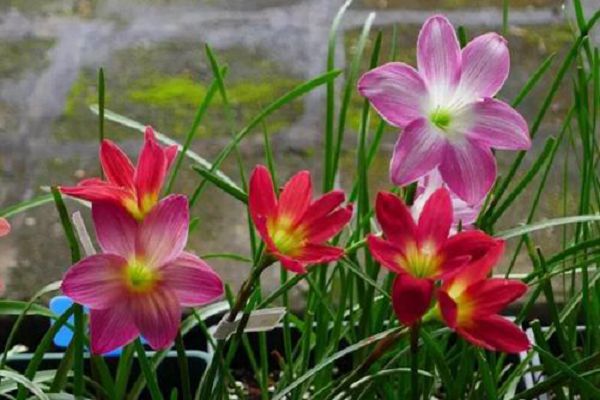
The first impression the rain lily gives people is one of swaying in the wind and rain, but this is actually just an illusion. The reason people call it the rain lily is to praise its fine, resilient quality. So what are the growing methods for the rain lily? Today the editor will introduce them to you.
I. Rain lily growing methods
1. We also call the rain lily the autumn zephyr lily (Zephyranthes candida), because its leaves are very similar to those of scallions. Overall, growing it is fairly simple. The rain lily likes to grow in an environment with plenty of sunlight, and it can also withstand low-temperature climates. With insufficient light, it blooms less, its leaves are not firm and upright, and it tends to lodge. At the same time, in summer, when the light is intense and there is no shade, the rain lily is very easily sunburned, which affects its overall development.
2. We should also choose the soil for growing the rain lily carefully. We mostly choose soil with good drainage and aeration; the soil can be slightly clayey.
3. The rain lily's flowering period is from April to September. During the flowering period, use mostly phosphorus- and potassium-based fertilizer, which can extend the flowering period; after the flowering period, apply mostly nitrogen- and potassium-based fertilizer to promote bulb development and produce more small offset bulbs. The more offset bulbs there are, the more flowers there will be.
II. Is the rain lily poisonous?
As to whether the rain lily is poisonous, the editor must tell you that it is. The rain lily is very nice as an ornamental, but if its stem is accidentally eaten, it may well cause dizziness, allergic reactions and other such conditions.