When does Iris lactea bloom? An introduction to its flowering period
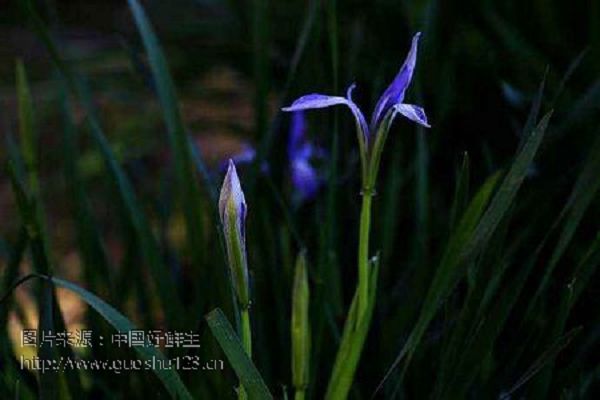
Iris lactea, also known as Iris ensata, Iris lactea var. chinensis, drought cattail, and horse leek, is a perennial herbaceous root plant of the genus Iris in the family Iridaceae, a variety of Iris lactea var. alba, and a perennial densely clumping herb. So when does Iris lactea bloom? In which month is the flowering period of Iris lactea?
According to experienced Iris lactea growers, its flowering period is from May to June.
Growth habits
Iris lactea has a well-developed root system, with roots reaching up to 1 m into the soil. Its fibrous roots are dense and well-developed, distributed in an umbrella shape, which not only gives it extremely strong resistance and adaptability, but also gives it a strong ability to bind soil and retain water.
The upright leaves of Iris lactea can effectively reduce water evaporation, ease the direct scouring of the soil surface by rain, and also help the roots breathe.
Under harsh environmental conditions, the aboveground part of Iris lactea becomes relatively shorter, and aboveground growth decreases by more than 20%; at the same time, the root system becomes more developed, increasing by more than 10%, all of which help it survive normally in adverse environments such as high temperature and drought, and waterlogging.
Its seeds germinate normally at a salt content of 0.44%; at a salt content of 0.51%, the germination rate drops noticeably; when the salt content reaches 0.75%, germination ability is lost. After germination, the seedlings can still grow normally and bloom and set seed under conditions of soil salt content of 0.27% and pH 7.9-8.8.
It grows in wasteland, roadsides, and hillside grasslands, and is especially abundant on salinized pastures that have been overgrazed.
It is salt-alkali tolerant and trampling tolerant, with a well-developed root system, and can be used for soil and water conservation and for improving saline-alkali soil.
Geographical distribution
It is distributed in Heilongjiang, Jilin, Liaoning, Inner Mongolia, Hebei, Shanxi, Shandong, Henan, Anhui, Jiangsu, Zhejiang, Hubei, Hunan, Shaanxi, Gansu, Ningxia, Qinghai, Xinjiang, Sichuan, and Tibet in China. It is also found in Korea, Russia, and India.
Plant characteristics
Drought resistance
Iris lactea has a well-developed root system, with roots reaching more than 1 m into the soil. Its fibrous roots are dense and well-developed, distributed in an umbrella shape, which is not only a strong guarantee of its extremely strong resistance and adaptability, but also gives it a strong ability to bind soil and retain water.
The upright leaves of Iris lactea can effectively reduce water evaporation, ease the direct scouring of the soil surface by rain, and also help the roots breathe.
Under harsh environmental conditions, the aboveground part of Iris lactea becomes relatively shorter, and aboveground growth decreases by more than 20%; at the same time, the root system becomes more developed, increasing by more than 10%, all of which help it survive normally in adverse environments such as high temperature and drought, and waterlogging.
Salt-alkali tolerance
Iris lactea is a plant tolerant of heavy saline-alkali conditions. Its seeds germinate normally at a salt content of 0.44%; at a salt content of 0.51%, the germination rate drops noticeably; when the salt content reaches 0.75%, germination ability is lost.
After germination, the seedlings can still grow normally and bloom and set seed under conditions of soil salt content of 0.27% and pH 7.9-8.8, making it a rare and excellent material for greening and improving saline-alkali land.
Leaf greenness and luster
In northern regions, Iris lactea generally turns green at the end of March, begins flowering in late April, enters full bloom from mid-May to the end of May, finishes flowering in mid-June, and turns yellow in early November, with a green period of more than 280 d.
Iris lactea is green in color, with elegant and beautiful flowers and fragrant nectar, and its flowering period lasts more than 50 days.
Pest and disease resistance
Iris lactea has extremely strong resistance to pests and diseases. Not only do pests and diseases never occur in a pure stand of Iris lactea, but because of its special secretions, pests and diseases rarely occur after it is mixed with other plants, greatly reducing the investment and cost required for pest and disease control after green ground cover is established.