How to Grow Nandina (Heavenly Bamboo)? A Complete Guide to Growing Methods and Precautions
Nandina, also known as Nandina domestica and Tianzhu Zi, is a flowering plant promoted in the south. It is often used in gardens because of its graceful plant shape, bright-colored fruits, and strong adaptability to the environment. However, in actual care, problems are often encountered, such as slow growth and a messy plant shape. So how should Nandina be grown? Let's take a look together with the editor.
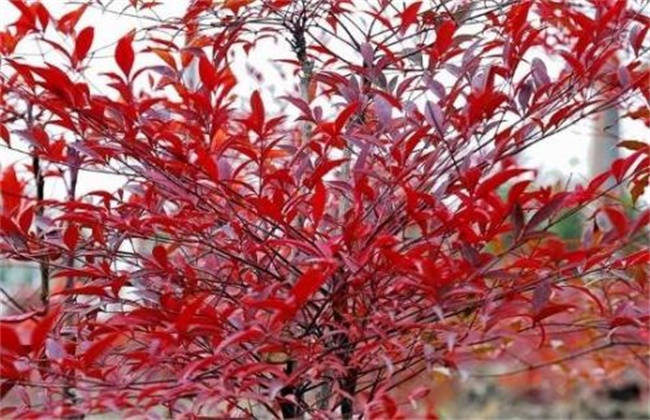
I. Growing Methods
1. Soil Requirements
Nandina has low requirements for soil, but when growing it in pots, because the pot soil is limited, it is recommended to choose fertile, loose sandy soil for growing. You can also use peat soil mixed with river sand and vermiculite, which ensures air permeability and also provides good drainage. A small amount of decomposed cake fertilizer can also be added, which allows it to grow more smoothly.
2. Suitable Temperature
Nandina is not afraid of cold, but it is afraid of heat. Summer temperatures are relatively high, so it enters a semi-dormant state, causing slow growth during this period and branches turning yellow and falling off. Therefore, in summer it is best to place it in a shady place for care, while in winter it should be kept indoors for care.
3. Light Conditions
Although Nandina has relatively strong shade tolerance, it cannot be placed in a poorly lit environment for a long time. Generally, placing it in an environment with scattered light is enough for normal growth. In summer, be careful to avoid strong direct sunlight, and seedlings especially must not be placed in the sun.
4. Watering Method
Nandina is tolerant of both waterlogging and drought. Watering it is relatively easy; just water it by the principle of watering when the soil is dry and stopping when it is wet. In summer and autumn during drought, water more, generally once a day, and also spray 2-3 times. In spring, water once every 3-4 days, and in winter, water once a week.
5. Fertilization Method
In fertilization, in addition to nitrogen, phosphorus, and potassium fertilizers, various trace elements should also be supplemented. Usually, cake fertilizer and bone meal are used alternately. In May, potassium dihydrogen phosphate is needed, and after September, ferrous sulfate is needed. There is no strict schedule for fertilizing Nandina; it is only necessary to provide sufficient nutrients without excess. Generally, fertilize 1-2 times a month starting from February, and stop fertilizing in July. The amount and concentration of fertilizer depend on the actual condition of the plant.
II. Precautions
Spring is the season when Nandina sprouts heavily. At this time, when the new buds grow to 2 cm, you can pierce its stem with a needle. When the new buds grow another 1 cm, pierce once more. This can make the bud stems thicker. Generally, the number of needle pricks should not be too many; 2-3 times is enough. This can make new buds continue to sprout and produce more branches. According to the growth condition of Nandina, repot it once every 1-2 years, generally in early spring. When repotting, appropriate pruning can be done, cutting off weak branches and dead branches. In addition, it should be noted that the whole Nandina plant is toxic. If it is accidentally eaten or the sap is touched, poisoning will occur, so special attention must be paid during care.
The above is an introduction to the growing methods and precautions for Nandina. We hope it can help you. If you want to learn more related knowledge, please follow us.