A Detailed Guide to Yellow Mealworm Farming Techniques and Management Methods
The yellow mealworm is an extremely popular insect in farming, with a very high protein content. The fattening effect on livestock regularly fed with them is very obvious, which has also led to a sharp rise in demand for yellow mealworms. So how should yellow mealworms be farmed? Anyone wanting to enter this industry should take a good look!
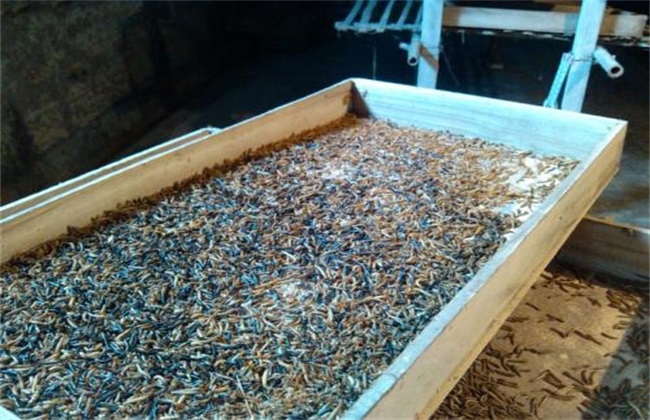
1. Setting Up the Farming Environment
The farming environment has a huge impact on yellow mealworms; if the environment is unsuitable, they simply cannot be farmed. Yellow mealworms prefer dark environments and have little need for light. The farming site must first have light control done well, and the light bulbs chosen should also be dimmer, but it must not be damp; a dry environment is needed. In addition, noise also has a great impact on yellow mealworms; this insect is very easily stimulated, so the quietness of the site must be ensured, which means the surrounding area should preferably be a long-term quiet environment. However, noise cannot be prevented by sealing the site off, because yellow mealworms need good ventilation.
2. Equipment Preparation
Once the farming environment is suitable, some farming equipment needs to be prepared, mainly three types. The first is the mesh box for farming adults; wooden or plastic mesh boxes are both fine and there are no strict requirements. The length and width can be set according to your own needs, as long as it is easy to move. The height should be controlled at around 8-10 cm to prevent the yellow mealworms from escaping during farming, since there is also bedding material at the bottom. The second is the egg box, which is used for hatching and does not need to be specially custom-made; it is sold specifically in many places. The third is the sieve, which you need to choose yourself. It is used for sifting eggs and for cleaning, so several types with different mesh sizes should be prepared.
3. Feeding Process
After putting the larvae into the prepared mesh box, feeding can begin. Bedding material should be prepared inside the mesh box; things like bran and rice bran are high-quality bedding materials, as they both give the yellow mealworms a place to move around and allow them to feed directly. What farmers need to do daily is regularly replace this bedding material, then add some vegetable leaves and the like to maintain nutritional balance, while also promptly cleaning up leftover vegetable leaves to avoid rotting. The leaves should be fresh, but their surface must not have moisture. If conditions allow, specially prepared feed can also be used.
4. Sanitation Management
During the farming process, sanitation should be managed appropriately. Although yellow mealworms are insects, if sanitation is neglected, diseases will still occur. Because the farming density is relatively high, once disease appears it is very likely to cause infection on a mass scale, so sanitation cleaning must be timely. When cleaning, simply use the prepared sieves to sift. Once the bedding material is found to be abnormal, or some abnormal black feces appears in it, that indicates the disease may be relatively serious and must be dealt with quickly. In daily handling, when you touch the shed material with your hand and find it is a bit moist rather than very dry, it should also be replaced in time, and this also indicates that the farming site may be a little too humid and needs improvement.
The above is the yellow mealworm farming technique. Farming yellow mealworms is not exactly difficult; the main thing is to be more sensitive to these environmental factors. In addition, when farming, you should learn more about self-breeding and self-raising, as this is relatively harder to master.