What is the difference between water-soluble fertilizer and compound fertilizer?
With the continuous improvement of agricultural science, there are now many varieties of fertilizer, and of course the prices are getting more and more expensive, so fertilizer must be used correctly. The fertilizers commonly seen now include water-soluble fertilizer and compound fertilizer. Many friends do not understand the difference between them and are rather confused when using them. Below, let's take a look together at the difference between water-soluble fertilizer and compound fertilizer.
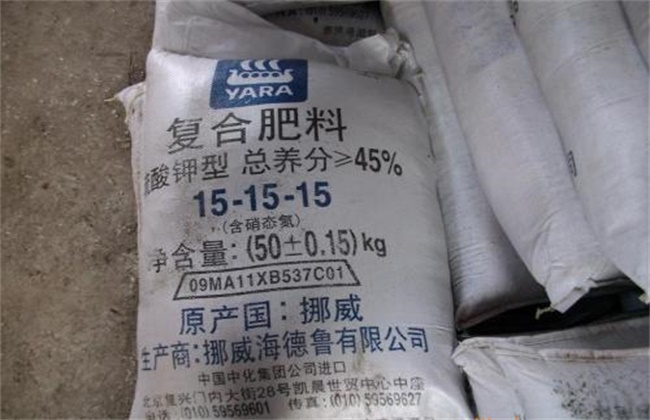
1. Difference in nutrient composition
Water-soluble fertilizer is a compound fertilizer that is completely soluble in water. Its forms include solid and liquid, and its nutrient content includes macronutrients, secondary nutrients and micronutrients. The water-soluble fertilizers commonly found on the market are amino acid and humic acid fertilizers. Water-soluble fertilizer is not only diverse in types, but also diverse in ratios, such as balanced fertilizer with a balanced nitrogen-phosphorus-potassium ratio, high-nitrogen fertilizer, high-potassium fertilizer and high-phosphorus fertilizer. Traditional compound fertilizer, however, has relatively simple element content, containing two or more nutrients, with the main components being nitrogen, phosphorus and potassium, and both its formula and nutrition are relatively simple.
2. Difference in method and dosage
Water-soluble fertilizer has a relatively wide range of use and can be used in almost every region of our country. Its application methods are mainly divided into foliar spraying, drip irrigation under film and root flushing, so the best application method can be chosen according to the environment and soil of different regions. Compound fertilizer is different; its application method is relatively simple, mostly soil application, and it can also be dissolved in water for foliar spraying. The dosage of water-soluble fertilizer is generally relatively small. If applied by flushing, generally about 5 kg per mu is enough, while compound fertilizer requires at least about 40 kg per mu.
3. Difference in effects
Water-soluble fertilizer is mainly used as a topdressing. Unlike traditional topdressing, it is a fast-acting fertilizer, crops absorb it relatively quickly, and its lasting effect after application is also relatively short, making it only suitable for application during peak fertilizer demand periods. Compound fertilizer, however, is mostly used as a base fertilizer. Its fertilizer effect is relatively long and it can continuously provide fertility for crops. The absorption and utilization rate of water-soluble fertilizer is extremely high. According to experiments, as long as the application method is correct, the absorption and utilization rate is generally above 90%, while the absorption and utilization rate of compound fertilizer is at most about 60%.
4. Advantages
The first advantage of water-soluble fertilizer is that it has sufficient nutrition and obvious fertilizer effect, because it is rich in various nutrient elements required for crop growth and development, and is greatly helpful for improving crop quality and reducing physiological diseases; the second is that it saves energy and is environmentally friendly. In terms of utilization rate, its degree of environmental pollution is far lower than that of compound fertilizer. It contains fewer metal elements and chlorides, and can avoid soil nutrient imbalance and structural damage. The advantages of compound fertilizer are that its nutrients are comprehensive and its content is high, and it can supply various nutrients needed by crops relatively evenly and over a long period at the same time. Moreover, it is mostly in granular form, which is convenient for storage and application and is more suitable for mechanized application.
The above is an introduction to the differences between water-soluble fertilizer and compound fertilizer. We hope it can help you. If you want to learn more related knowledge, please stay tuned to us.