What month does the lipstick plant bloom? A guide to its flowering period
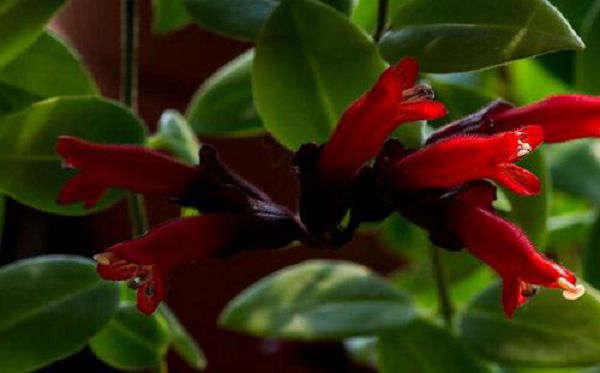
The lipstick plant, also known as Huamanhao or lipstick flower, is a perennial evergreen trailing herbaceous flowering plant in the family Gesneriaceae, genus Aeschynanthus. It is native to the tropical regions of Indonesia and eastern India. So what month does the lipstick plant bloom? In which month is the lipstick plant's flowering period?
According to experienced lipstick plant growers, the lipstick plant's flowering period generally runs from November of the current year to June of the following year. Some sources say the flowering period lasts until February of the following year, but I have seen on more than one occasion that flower enthusiasts' lipstick plants bloom in May and June, so actual conditions should be taken as the standard.
Fertilisation precautions for the lipstick plant
1. During the lipstick plant's vigorous growth period, apply a decomposed organic fertiliser solution once every 15 to 20 days. The potting soil should be kept constantly moist, but never allow water to accumulate in the pot, as this can cause root rot. As the weather gradually turns cooler in autumn, gradually reduce the amount of watering and fertilising.
2. In winter, the potting soil should be kept slightly dry. Apart from applying a little fertiliser solution containing somewhat more phosphorus before budding and flowering, in general little or no fertiliser should be applied.
Growing environment
It prefers a warm, semi-shaded environment with bright light.
Distribution range
This flower is native to the tropical regions of Indonesia and eastern India.
Main value
Landscape use
Huamanhao is a flowering plant that is very easy to keep alive and cultivate. It can be grown both for its flowers and its foliage, making it one of the flowers with considerable ornamental and cultivation value. It grows quickly, has dense branches and leaves, and a long flowering period. It is suitable for growing as a hanging plant, for placement on home balconies and in sunny indoor spots, and in gardens it is often used to create desert landscapes.
Propagation method
Propagation can be done by cuttings. Spring and autumn are the suitable seasons. Select robust, plump branches and cut them into sections of 7-10 cm each. Insert the cuttings into loose sandy soil, or into a growing medium made up of 50% fine tree-fern fibre, 20% perlite and 30% coarse sand. Keep the humidity appropriate and provide about 50-60% sunlight. Roots should form and plants develop after about 30-40 days. Once the root system has grown vigorously, transplant them into pots or flower beds for cultivation.
Cultivation techniques
It is extensively managed and easy to care for. A loose, fertile sandy loam is best as the growing medium, and drainage must be good. The growing site must be cool and well ventilated, with about 50%-70% sunlight; avoid direct strong light. The optimum growing temperature is about 15-25°C. From March to September, during the vigorous growth period, water demand is relatively high, so water and mist frequently to increase humidity; after autumn, gradually reduce watering to improve the plant's cold resistance. Throughout the year, apart from appropriately shading the strong midday light in midsummer, give it ample light at other times, especially in winter. It likes a semi-shaded environment. If the placement site has light that is too strong or insufficient, the leaves will easily turn pale green or yellow-green, lose their vitality, and lose their proper ornamental value, or may even wither and die. If exposed to direct sunlight with dry air, it is most prone to scorching, so it should be placed in a cool, ventilated spot and care should be taken to maintain environmental humidity. It dislikes continuous high temperatures and high humidity; poor drainage and ventilation will cause rotting.
Pest and disease control
The plant is robust and not prone to pests and diseases, but if water accumulates in the potting soil and ventilation is poor, besides causing root rot, root rot disease may also occur. When the disease strikes, spray or drench the affected plants with a 1000-fold dilution of 40% root-rot fungicide, or drench the roots with a 1500-fold dilution of 80% 402 emulsifiable concentrate.