Why do gardenia leaf tips dry out and turn brown?
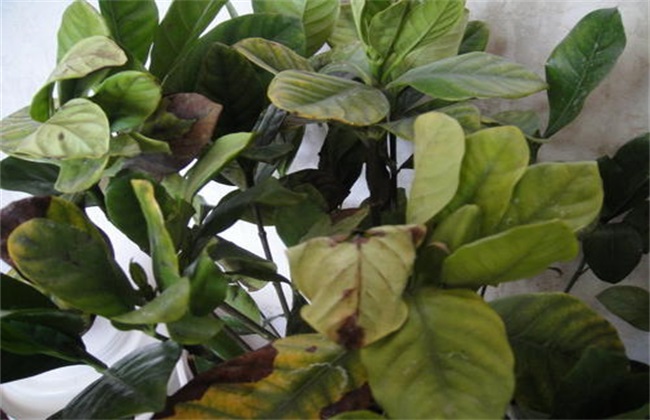
Gardenia is a very well-known flowering plant, cultivated in basically every part of our country. It can not only beautify courtyards and parks, but also be used to make tea, with certain beneficial effects, and it is welcomed by many people. However, when growing gardenias, the phenomenon of leaf tips drying out and turning brown often occurs. So why do gardenia leaf tips dry out and turn brown? Below, the editor will briefly introduce this to everyone, let's take a look!
1. Improper watering
Proper watering is very beneficial to the growth of gardenias, but when watering, if improper watering leads to excessive amounts, then water easily accumulates in the soil, and the phenomenon of too much water suffocating the roots is prone to occur, causing the gardenia to be unable to grow normally. It reduces the growth rate of the gardenia, thereby causing the leaf tips to dry out and turn brown, and in severe cases it can cause the plant to wither. Therefore, if too much water was given, the plant should be dug out completely, the roots dried, and the soil drained of water and moisture. If necessary, new soil can be used again to promote recovery as quickly as possible, and for later watering, care must be taken not to let water accumulate.
2. Light reasons
Although light is very important to the growth of gardenias, you must also be sure to maintain a suitable duration and intensity of light. If the light is too strong, it will not only cause the gardenia leaves to be scorched, but also cause yellowing and drying. However, it should not be kept without light for a long time either, otherwise it is also very unfavorable to the growth of the gardenia. Therefore, when we grow gardenias, if the light is too strong, then it should be moved to a shaded place in time, and then appropriately sprayed with water to increase air humidity. On the contrary, if the light is too weak, then it should be given appropriate supplemental light, but note that it must never be exposed to direct strong light, especially in summer.
3. Excessive fertilizing
During the growth of gardenias, if you want to increase the flowering rate and ornamental value of the gardenia, then fertilizing work is indispensable. But when fertilizing, you must also pay attention to controlling the amount. If too much fertilizer is applied, causing the fertilizer concentration to be too high, then the plant's roots will be burned. This leads to undesirable phenomena such as yellowing leaves and withered leaves, and in severe cases can lead to death. Therefore, if too much fertilizer was applied, water should be given in time to flush out the fertilizer, and in severe cases, the soil should be replaced, the rotten roots cut off, and the plant replanted.
4. Poor ventilation
Nowadays gardenias are mostly grown as potted plants. And potted cultivation is generally done indoors. If the air circulation indoors is poor, causing the air quality to be too bad, then it is very unfavorable to the growth of the gardenia. Moreover, it will also lead to high temperature and high humidity, which will not only cause the phenomenon of drying and browning, but in severe cases will also cause death. Therefore, when we grow gardenias, we should pay attention to maintaining a good environment, improving air permeability, and ensuring the normal growth of the gardenia.
The above is a brief introduction to why gardenia leaves dry out and turn brown. That is all for today's introduction. This article is for reference only, and I hope it can help everyone!