What to Do When Dianthus Leaves Turn Yellow? Causes and Solutions
Dianthus is a common potted flower in everyday life, and many beginners don't know how to grow it. Before long, they find that the dianthus leaves have turned yellow. Many people panic as soon as they see yellowing leaves and don't know what to do. So what causes the leaves to turn yellow? Let's find out together.
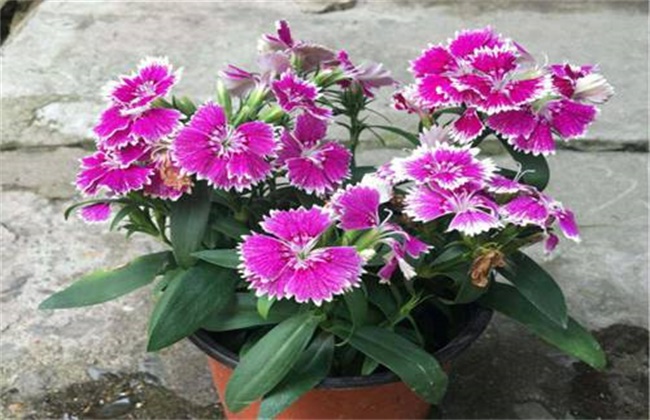
1. Improper watering
Dianthus is a plant that likes warmth. During care, improper watering will cause its leaves to turn yellow. When watered too little, the leaves turn yellow and drop from bottom to top due to drought and lack of water, and in severe cases the leaf stalks droop and wilt. If watered too much, the old leaves show no obvious change, but the young leaves turn pale yellow, and in severe cases the root system rots and the plant dies.
Solution: When watering dianthus, be sure to water in the right amount. If you have watered too little, you can solve it by appropriately increasing the frequency of watering. For overwatering, drain the excess water promptly. You can place the flowerpot on newspaper or peat, which will absorb the excess water, or simply take the plant out of the pot and replant it.
2. Insufficient light
Dianthus is a light-loving plant. If it is grown indoors for a long time in an environment with insufficient light, its leaves will turn yellow and drop, causing the old leaves to wither after new branches and new leaves sprout, and the yellowing of the leaves can also cause edema disease.
Solution: Yellow leaves will absorb the nutrients the plant itself has accumulated and return to normal, but this situation causes the leaves to consume far more nutrients than they produce, so it is better to simply remove the yellow leaves promptly and then place the plant in a sunny environment for care. In this way, yellow leaves will no longer appear.
3. Temperature too high
When summer temperatures are high, dianthus enters a semi-dormant state. Too high a temperature affects the root system's absorption of iron from the soil, causing the heart leaves to develop high-temperature, iron-deficiency yellow leaves and white leaves. When the plant is only mildly deficient in iron, the mesophyll tissue is pale green and the leaf veins remain normally green, but in severe cases the young leaves are entirely yellow-white, and necrotic spots appear and gradually scorch and drop off.
Solution: There is no need to worry too much about this situation. You can spray or water with chelated iron solution, once a week, and it will return to normal after three consecutive weeks. At the same time, you need to control the temperature. You can place it in a cool, ventilated spot and let the leaves slowly return to normal.
4. Not changing the pot and soil for a long time
Not changing the pot and soil for a long time can also cause dianthus leaves to turn yellow. Generally, the pot should be changed once every two years. The pot soil is effective; as it grows, the root system in the pot becomes crowded and the nutrients are used up, resulting in tall plants with long branches and thin, yellowing leaves. At this point, the pot needs to be changed promptly.
The above is an introduction to the causes and solutions for yellowing leaves on dianthus. We hope it helps you. To learn more related knowledge, please follow us.