Orchid repotting precautions: never water at will, or it will die
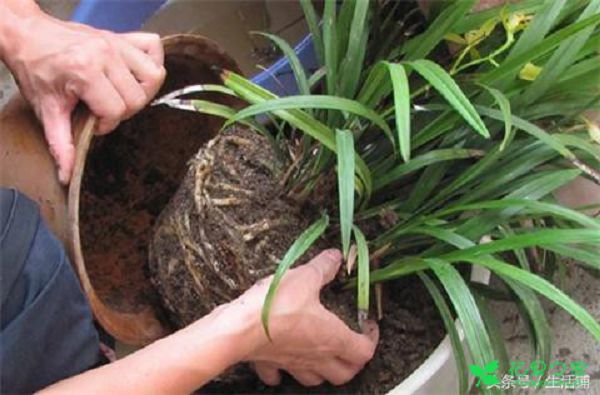
Repotting is one of the tasks in orchid care. Usually, potted orchids need to be repotted once every two years. By then, the nutrients in the pot are nearly used up, and the orchid has multiplied into many plants with overly dense roots, leaving no room for new roots to spread; dead, shriveled old roots remain in the pot and may spread disease. So repotting is essential. How should you repot, and how should you water? Now let me explain:
How to transplant and repot:
Step one: dry the orchid out first before transplanting. If the growing medium is dry, the following steps will be much simpler. If it is a plastic pot, gently squeeze the pot, and the orchid's roots will separate from the pot wall. Then carefully take the pseudobulbs out of the pot, trying not to bring the old growing medium along.
Step two: use scissors to cut away all dead or rotten roots. Healthy roots feel firm to the touch, while diseased or dead roots are soft and brown. The outermost ring of the root separates easily from the inner layer. If a root breaks during repotting and transplanting, this is not a big problem, as long as the inner layer of the root remains intact.
How to water:
After planting, place it in a shade shed, mist the leaf surface morning and evening, water thoroughly to settle the roots 24 hours later, and move to normal care after 15 days.
Note: when the potting soil is 70 to 80 percent dry, that is, soil that is not too dry but not very wet either, water to settle the roots 24 hours after transplanting; this can prevent the orchid from rotting and dying due to bacterial disruption.
If the soil is very dry and has no moisture at all, you can water thoroughly right after repotting, but note that for the next 15-20 days you should water less than usual, and wait about 20 days until the orchid has adapted to the new conditions before returning to normal watering.
When watering the orchid, you can choose a watering can with a fine spout and a long neck, and keep watering until water flows out of the bottom of the pot; this ensures the soil is watered evenly, which is very good for root growth.
Orchids should not be watered much in normal care either; keep the orchid soil in a moist state, that is, slightly on the dry side of moist. If the orchid soil stays wet for a long time, the roots rot easily. The growing medium must stay permeable to water and air, and there must be no standing water in the pot. In addition, orchids should avoid direct sunlight; just place them in a ventilated spot with light.