How to grow orchids well? Ventilation management is key
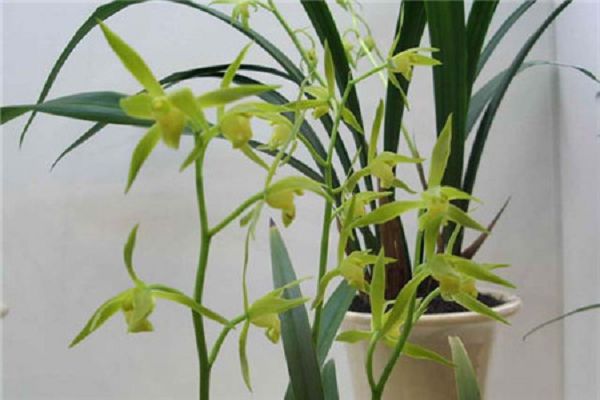
Orchids can only carry out their various physiological activities normally in fresh air, thereby growing robustly, so good ventilation and air exchange is a necessary condition for growing orchids well.
Ventilation of the orchid site and shade shed
The site should be as spacious as possible and located in a high place. The flower platform can be built with bricks or stones, or empty flower pots can be placed upside down with the orchid pots on top, keeping the orchid pots 20 cm to 40 cm above the ground. Especially in poorly ventilated places, the orchid pots should be placed as high as possible. For the shade shed, use bamboo blinds and bamboo fences, which are cheap and good, and provide good ventilation.
Ventilation and air exchange for indoor orchids
For houses, closed plastic sheds or glass sheds, especially those heated with coal, when the indoor temperature exceeds 10°C, the windows should be opened or the film lifted every day. In rooms sealed tightly on all sides in winter, an electric fan should also be used for directional exhaust ventilation at noon when the temperature is high.
The temperature in a greenhouse is generally higher at the top and lower at the bottom, so the air inlet should be at the lower part and the air outlet at the upper part, giving fast ventilation speed and more thorough removal of harmful gases. Note that ventilation should be combined with spraying water, properly handling the relationship among ventilation, heat preservation and moisture retention, and preventing cold wind from blowing directly.
The density of orchid pots placed indoors should be sparse rather than dense, maintaining sufficient distance. If the area is narrow, the flower platform can be built in a stepped shape. Note that the surface of the orchid pots should be rinsed with water frequently, and the front and back of orchid leaves should be sprayed to ensure the stomata remain unobstructed.
Ventilation of orchid pots and potting soil
(1) Orchid pots should preferably be tall, high-footed, thin-walled tile pots with strong air permeability; orchid pots with multiple holes in the pot walls and bottom can also be chosen.
(2) The growing medium or potting soil should preferably adopt a layered method. If using potting soil, cover the bottom hole of the pot with 2 to 3 small bricks, spread a 3 cm thick layer of lump charcoal, then fill in a mixed soil of decomposed humus soil and river sand up to 1/2 of the pot height, add a 3 cm thick layer of burned cinder, and on top cover again with mixed soil up to the pot rim, so that the orchid pot has an environment where gas can easily circulate.
(3) The number of plants planted per pot should not be too many. If there are many plants and the leaf clusters are dense, they should be repotted and divided in time, and weeds, diseased leaves and dead leaves in the orchid pot should be frequently removed to facilitate ventilation.