Can Orchids Be Repotted in May? Repotting Timing and Precautions
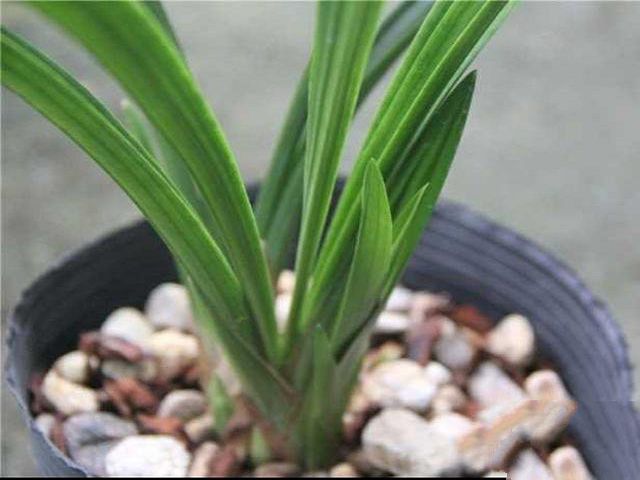
Orchids broadly refer to two major categories: terrestrial orchids (Chinese orchids) and epiphytic orchids (exotic orchids). According to the growth habits and growth patterns of orchids, either type can be repotted at any time of the year. However, this should be limited to the many orchid growers with years of experience, and only when temperature, humidity, environment and various other conditions are suitable. For some novice orchid growers who have just entered the field, it is best to determine the repotting time based on the actual growth conditions of the orchid plant and the changes of the seasons.
According to the conventional repotting time, the operation should be carried out before the new leaf buds of the orchid plant have emerged from the soil. However, the budding time of orchid plants varies early or late depending on the variety and management conditions. Therefore, when repotting and changing the soil for orchid plants, it is best to carry out the operation when the leaf buds have just begun to sprout and have not yet emerged from the soil.
After entering May, the leaf buds of most orchid varieties begin to sprout and grow, and some have even grown out of the soil. For example, many varieties of Cymbidium ensifolium (Jianlan) have already had their leaf buds emerge from the soil in May. In this situation, novice orchid growers should avoid the operation as much as possible, to reduce damage to the leaf buds and root system caused during the operation, and also to reduce the phenomena of stunted seedlings, root rot and leaf dieback that occur due to inadequate management after repotting. Improper operation will greatly prolong the time for the orchid plant to establish itself after repotting.
In summary, orchid plants can be repotted in May, but the most important thing is to base this on your own orchid-growing experience and the actual growth conditions of the orchid plant, and not to judge and determine the repotting operation one-sidedly from a certain period of time. The orchid-growing experience and knowledge you have already mastered should be applied flexibly, not mechanically.