How to deal with root rot in nasturtium? Teach you the correct solution
Nasturtium (Tropaeolum majus) likes a mild climate and cannot tolerate severe cold or intense heat. When grown in pots, it needs loose, breathable soil. It likes moisture but fears both drought and waterlogging, and all of this is to prevent root rot. Many friends have encountered root rot while growing it, so what should be done? Let's take a look together.
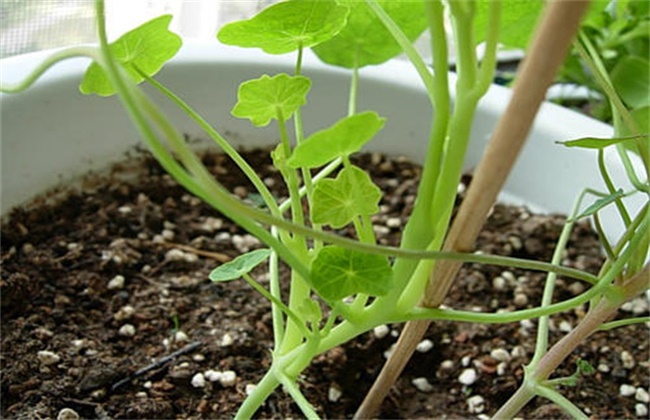
I. Causes of root rot in nasturtium
1. Waterlogging
From its name we can see that it is not suited to growing in water. Once there is too much water, its roots cannot breathe normally, and over time they suffocate and die, which leads to root rot. This is especially true after flowering, when excessive water very easily causes its roots to become waterlogged and rot.
2. Excessive fertilizer
When fertilizing any flowering plant, you must not apply too high a concentration, nor apply too much at one time. Although fertilizer can promote plant growth, it is still human intervention, and too much intervention does not necessarily make nasturtium grow better; it may have the opposite effect, and root rot is one manifestation of that.
II. Solutions
1. Prune the rotten roots
When nasturtium has root rot, first take the plant out of the potting soil, promptly remove the rotten roots, and spray the roots with a carbendazim solution to disinfect and sterilize them, then place them in a cool place to dry for a day. When removing it from the pot, be careful, because the stems of nasturtium are rather fragile, so you must be gentle to avoid breaking them.
2. Replace the potting soil
After pruning the rotten roots, you cannot just leave it alone. You also need to prepare new potting soil for it and continue care. Nasturtium can generally be grown in a substrate mixed from leaf mold, river sand and bone ash. After mixing, the soil must be disinfected to avoid a second infection, and then the plant can be repotted for care.
3. Control water and stop fertilizing
Root rot caused by improper fertilizer and water cannot be solved only by pruning and renewing, and replacing the potting soil for care. You also need to control water and stop fertilizing during later growth, wait a week before watering it appropriately again, wait for the plant to regrow roots, and once it gradually recovers its vitality, resume fertilizing for care.
4. Control temperature and keep warm
Nasturtium generally needs to be placed in sunlight, and only in sunlight can it grow better. After treating root rot, first keep it in a semi-shaded place. If it is winter, you can place it directly in sunlight, and at the same time make sure the temperature stays above 5°C to prevent it from freezing to death.
The above is an introduction to how to deal with root rot in nasturtium. I hope it can help you. If you want to learn more related knowledge, please follow us.