Detailed Explanation of Winter Pond Aeration Techniques and Methods
As temperatures drop, winter has gradually arrived, and the water temperature in fish ponds in winter is very low. Especially in northern regions, fish ponds are highly prone to freezing over. Once a fish pond freezes, until it thaws, the pond is prone to insufficient oxygen, which is very detrimental to fish growth. So how should fish ponds be aerated in winter? Today, the editor will give everyone a brief introduction. Let's take a look below!
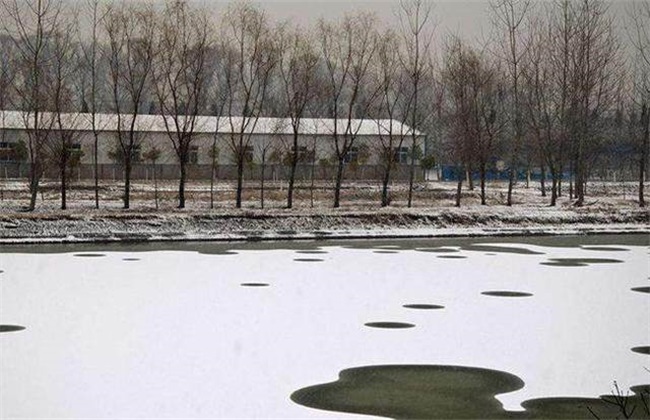
1. Breaking the Ice for Aeration
When aerating a fish pond in winter, if the pond surface is frozen, the first thing we need to do is break the ice on the pond. And to maintain sufficient dissolved oxygen in the pond, the ice should be broken at least twice a day. Control the size of the ice holes according to the pond area; generally, the ice-breaking hole area for a one-mu fish pond is about 5 sq m, and after breaking the ice, the ice blocks should be promptly removed to avoid injuring the fish.
2. Adding New Water for Aeration
When a fish pond suffers from oxygen deficiency in winter, if the insufficient dissolved oxygen is due to a lack of water, then we can directly add new water to the pond for aeration. When adding new water, note that the time should not be too long, and the amount should not be too much. Part of the old pond water should be drawn out, then a corresponding amount of new water added. At the same time, we should also note that the temperature difference between the new water added and the pond water should be kept at about 4 degrees, to avoid excessive temperature changes causing stress in the fish.
3. Circulating Water for Aeration
Circulating water aeration is currently a relatively commonly used aeration method for many fish ponds. Those with the conditions can install a circulation system in the fish pond to keep the pond water in a slightly flowing state. And during overwintering, part of the pond water flows out at all times, and a corresponding amount of new water flows in. This aeration method is very effective; it can not only increase the dissolved oxygen in the pond, but also expel harmful gases from the pond.
4. Chemical Aeration
Chemical aeration is the use of chemical aeration agents such as calcium peroxide and hydrogen peroxide to increase the dissolved oxygen in the pond water. The efficiency of chemical aeration is very high, and the aeration effect is also very obvious. Because when using chemical aeration agents for aeration, adding about 15 milliliters per cubic meter of water is sufficient. However, it should not be used in excess, because after all, it is a chemical agent, and using too much is very detrimental to fish growth.
5. Other Aeration Methods
In addition to the several aeration methods above, we can also carry out inflatable aeration. Inflatable aeration, understood literally, means using some inflatable aeration equipment, such as low-pressure blowers and air compressors, to inject oxygen into the pond. Or we can regularly add appropriate amounts of quicklime, bleaching powder and other agents to the pond to increase the dissolved oxygen in the pond, and these agents also have the effect of purifying water quality.
The above is a brief introduction to how to aerate fish ponds in winter. That's all for today's introduction. This article is for reference only. Thank you all for reading and supporting.