Key Technical Points and Methods of Ulomoides dermestoides Farming Explained
The Ulomoides dermestoides, also called the "foreign beetle," is an insect with relatively high nutritional value. With the development of its uses, market demand for it is quite high. Farming Ulomoides dermestoides actually does not require much technical skill; it depends more on their own reproduction, and farmers mainly just need to manage environmental control well. So how do you farm Ulomoides dermestoides?
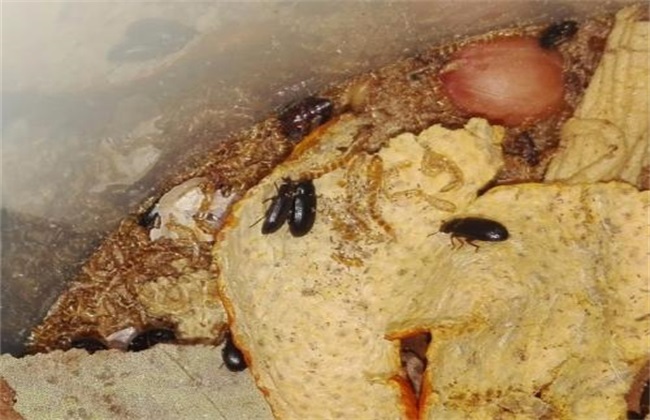
1. Site Setup
For farming, there is no need to specially prepare a very large space, because the containers for Ulomoides dermestoides are generally fairly small and can be stacked on top of one another, which makes management and control convenient and also saves on site construction costs. The farming containers are generally mainly plastic boxes, about the size of a washbasin, with a height generally above 20 cm. Ventilation holes should be left in the bottom; in summer, the top can be sealed with mesh, and in winter, it can be covered with a lid while leaving air holes, making temperature control easy.
2. Temperature and Humidity Control
Ulomoides dermestoides is quite sensitive to both humidity and temperature. At temperatures of 25-30°C, it is most active by nature; above 30°C, its mortality rate rises, and at 15°C, its activity declines until it enters a dormant state. If temperature is controlled well, it will remain relatively active all year round and keep reproducing. During the egg or larval stage of Ulomoides dermestoides, keeping humidity above 70% is more suitable for larval growth, while for adults it should be controlled at around 50%. When humidity is too high, watch out for mites.
3. Feeding Management
The daily food of Ulomoides dermestoides is easy to obtain, but its quality is also closely related to what is fed to them. Ulomoides dermestoides likes sweet foods, and their daily diet is mainly dried dates, carrots, walnuts, peanuts and the like; ordinary farming varieties are generally fed these. For higher quality, they are generally raised on medicinal materials such as lingzhi slices, and the Ulomoides dermestoides raised this way are naturally of quite high quality. Ulomoides dermestoides has no fixed feeding time; farmers only need to put the food inside, and they will eat it slowly, so it is enough to replenish it promptly when it is almost finished.
4. Hygiene and Diseases
Ulomoides dermestoides itself excretes feces, but its eggs are generally also present among this feces, so the feces are not cleaned frequently and need to be cleaned only after a relatively long time. The cleaning time is generally chosen during a period when egg-laying is relatively low, so that losses are smaller. Mites are one of the biggest threats to Ulomoides dermestoides and also its most common disease, and this is very difficult to eradicate completely, so the things fed to them must be kept clean and hygienic, and special attention must also be paid to humidity.
The above are the farming techniques for Ulomoides dermestoides. Raising them mainly depends on controlling the farming environment; it is easy to get started, but especially difficult to master. If the mating and reproduction of Ulomoides dermestoides is relatively slow, you can try placing a water-plugged test tube inside, as this may improve the mating results.