How to Grow Pachystachys lutea? Detailed Guide to cultivation methods and precautions
Pachystachys lutea is a rather unusual ornamental plant. Its inflorescence is very large, but the flowers are hidden within golden-yellow bracts, making it look extremely peculiar. So how should Pachystachys lutea be grown? What should be paid attention to? Follow the editor to learn more in detail.
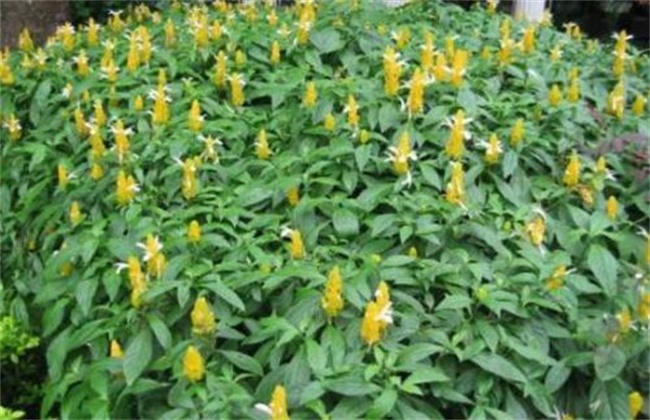
I. Cultivation methods
1. Soil
For growing Pachystachys lutea, it is best to choose sandy soil rich in humus. For example, you can mix peat soil, turf, and vermiculite, and you can also add some base fertilizer to the soil, then repot every 1-2 years. You can also buy potting soil from a flower shop for growing it.
2. Light requirements
Pachystachys lutea likes a sunny environment and is also tolerant of partial shade, so its light requirements are relatively flexible. In spring, autumn, and winter, it can be placed directly in sunlight. In summer, the temperature is higher and the sunlight is stronger. At this time, if it is directly exposed to the sun, it may cause the leaves to turn yellow and affect its ornamental value, so proper shading is needed in summer.
3. Temperature requirements
The optimal growing temperature for Pachystachys lutea is between 16-28 degrees. It is not cold-tolerant, so when the temperature is low in winter, cold protection measures need to be taken. When the temperature is below 10 degrees, its leaves will drop. In winter, it is recommended to keep it indoors.
4. Watering
Pachystachys lutea likes a high-humidity environment and has relatively weak drought tolerance, so it usually needs frequent watering to keep the soil moist without drying out. At the same time, it also needs more spraying to keep the soil in a relatively high humidity range. However, watering should also avoid waterlogging, otherwise it will cause its root system to rot.
5. Fertilizing
To make Pachystachys lutea grow faster, fertilizing is essential. During the growing period, it generally needs to be fertilized once every 15-20 days. Fertilizers such as urea and organic fertilizer can be used to ensure balanced nutrition without excess. During high temperatures in summer and low temperatures in winter, fertilization should be stopped to avoid fertilizer damage.
II. Precautions
1. Fertilizing during the flowering period
Special attention should be paid to fertilizing during the flowering period. When fertilizing, do not apply only nitrogen fertilizer, otherwise the flower stems will become slender and the number of flowers will be small. Therefore, during the flowering period, a potassium dihydrogen phosphate solution can be sprayed, which can make Pachystachys lutea bloom more brightly. During the flowering period, a phosphorus-potassium fertilizer can be applied once to promote Pachystachys lutea to form flower buds, thus blooming continuously.
2. Timely pruning
The plant height of Pachystachys lutea is usually 30-50 cm. When it is a seedling, we should pinch it to control plant height. You can remove the new shoot tips at the top when it is a seedling, and pinch it again once the branches grow to a certain extent, so that it sprouts more side branches.
3. Pests and diseases
The main diseases of Pachystachys lutea are powdery mildew and sooty mold, and the main pests are aphids, scale insects, and red spider mites. For prevention, pay attention to good ventilation in the environment and make sure humidity does not exceed 90%. When pests and diseases occur, spray pesticide promptly.
The above is an introduction to the cultivation methods and precautions for Pachystachys lutea. I hope it can help you. If you want to learn more related knowledge, please stay tuned to us.