Detailed explanation of the three steps of repotting orchids, suitable for both beginners and experienced growers
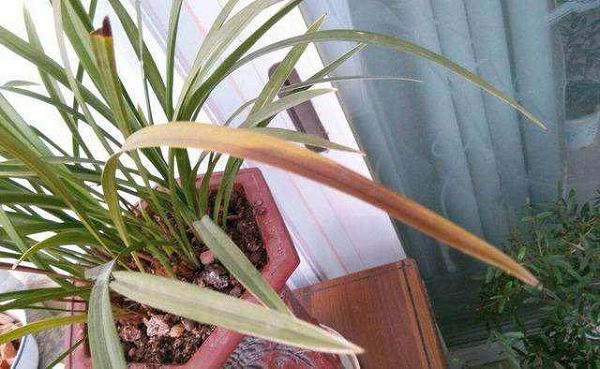
Friends who like orchids should know that orchids are a perennial herbaceous plant with a relatively slow growth rate. Like other plants, orchids also need a relatively stable environment to grow, which means the potting medium in the pot and the surrounding environment need to be relatively stable, and frequent repotting and soil changing are not suitable.
Under the condition of providing orchids with a relatively stable environment, orchids can grow very well for many consecutive years, and will get better year after year. Orchid growers who observe carefully in daily life should also notice that in the first year after repotting, the growth of the plants is not that great, while starting from the second year the growth will be noticeably better than before, and the new shoots will also be stronger than in the first year. This shows that after a longer period, the orchid has already begun to adapt to the environment you have provided for it. And when it has just begun to adapt to this environment, you want to change it again. Tossing it back and forth like this, your plants will only become weaker and weaker the more you grow them.
The purpose of repotting is to divide the plants or replace the medium so that the orchids grow better, but repotting too frequently will achieve the opposite effect. Especially now that most of us use granular medium, after repotting, the degree of contact between the orchid roots and the medium will be greatly reduced, thereby greatly affecting root growth and the absorption of nutrients. Therefore, unless there is something wrong with a potted orchid, it is generally very rarely repotted and given fresh soil within 2 years.
As for the medium, I think growing orchids is actually also a process of cultivating the medium. Orchid growers who have kept fish all know that to keep fish you first cultivate the water, and this is the same principle. Once the medium is well cultivated, the plants will grow better and better. Under proper management, as long as the newly grown shoots do not show a phenomenon of being clearly weaker than the previous generation, it means the medium is basically workable and can continue to be used. Many orchid growers happen to pour out and replace or throw away the medium in a pot just when it has not yet been fully cultivated and matured, or just when it has just been cultivated and matured. What a pity. Those who are reluctant to throw away the replaced medium sometimes also use old medium to grow some common orchids. You may find that these common orchids grown with old medium grow far better than those you grow with new medium. As long as we ponder it carefully, it is not hard to figure out the reason.
As for the medium, as long as it has not been used to grow diseased orchids, it can be reused after screening. Especially mixed granular medium, when its properties have not changed, can be reused for ten or eight years without problem. The old medium that has been replaced, as long as the orchids previously grown in it showed no adverse reactions, should as much as possible be added to the new medium for use, in order to retain the orchid mycorrhizal community already formed in the original medium. Also do not let the properties and proportions of the new and old medium undergo too great a change. Alternatively, through growing you can summarize whether the old medium has any shortcomings, and by adding some other medium to adjust the ratio, it may be much better than using a completely new medium mix.