How to grow Clivia? Four-season care and management plus precautions
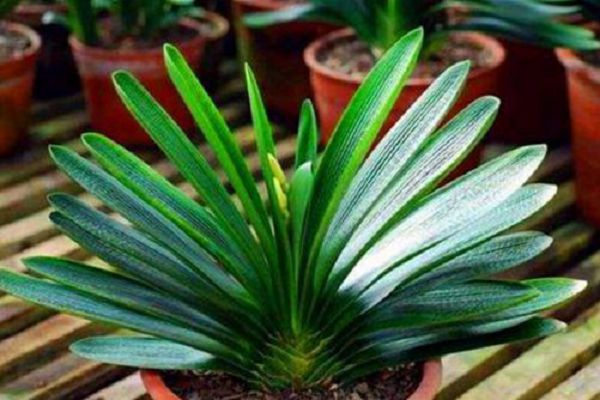
Clivia is an ornamental flowering plant, a perennial herb of the genus Clivia in the Amaryllidaceae family. It is also called sword-leaf lycoris and large-leaf lycoris. Its flowering period is mainly in winter and spring, lasting up to 2 months. Its glossy green leaves and bright flowers have great ornamental value, making it a flower variety deeply loved by everyone. Good varieties have been hyped to sky-high prices. Clivia is delicate and relatively difficult to grow. The common problems are that the plant loses its shape, root disorder, and failure to bloom. Below, the editor shares with you the four-season care and management of Clivia plus precautions, and discusses with you how to grow Clivia well.
I. Characteristics of Clivia
Clivia prefers a cool and humid environment, and the most suitable growth temperature is 15-25 degrees. At 10-5 degrees it grows slowly or enters dormancy; below 5 degrees the leaves will be frostbitten and frozen to death, so in late autumn Clivia must be moved indoors or to a place sheltered from the cold for growing. Clivia fears scorching sun and high temperatures. When the temperature is above 30°C, the leaf tips begin to turn yellow and scorch, slowly extending to the whole leaf, and in severe cases the entire plant will wither. When the temperature is above 25 degrees, the safest thing is to move Clivia under a large shady tree. Clivia prefers to grow in slightly acidic, loose, granular soil.
II. Four-season care and management of Clivia plus precautions
1. Spring care and management: avoid wind
In early spring, after winter dormancy the Clivia root system begins to revive. Due to insufficient nutrient supply, once exposed to wind and sun, the leaves will dehydrate, and even turn yellow or rot. So at this time pay attention to:
a. Clivia is drought-tolerant but not moisture-tolerant; keeping the potted plant generally moist is enough, as too much watering will rot the roots.
b. Do not spray water before the flower stalk emerges and blooms.
c. Apply fully decomposed liquid fertilizer water once every half month, following the principle of light fertilizer applied frequently. Never apply concentrated fertilizer or raw fertilizer, to avoid root rot and scorched leaves.
2. Summer care and management: avoid sun exposure
Clivia is not strict about light; it likes semi-shade and fears direct light. High summer temperatures easily cause its roots to become disordered, and unbalanced nutrient absorption leads to neck stretching and leaf bolting. In addition, summer sunlight is strong, and if watering is improper the leaf color turns scorched yellow, or even wilts. So pay attention to:
a. Shading: it is best to place the potted plant under a shade shed, avoiding direct sunlight at noon.
b. Cooling: place the potted plant in a cool, ventilated place, spray water frequently to cool it down, and keep the temperature below 25°C and the humidity at 60-70% for growth.
c. Reducing fertilizer: when the temperature is above 25°C, appropriately reduce or stop fertilizing; too much fertilizer will burn the fleshy roots.
d. Watering: when the potting soil is half dry, water it, and water thoroughly when watering. Never let water get into the leaves, to avoid rotten heart disease.
3. Autumn care and management: rain exposure, water spraying
In autumn the climate gradually turns cool. If Clivia is exposed to rain or overwatered, it will lead to root rot, rotten flower stalk, and rotten heart.
a. Do not spray water when Clivia is bolting and blooming.
b. About every half month, water once with decomposed cake fertilizer water at a 1:3 ratio.
c. When watering, prevent water from getting into the center of the leaf cluster, and do not let rainwater get into the leaf cluster either, to avoid rotten heart, which in severe cases will make the whole plant rot and die.
4. Winter care and management: avoid low temperature and dryness
In winter, when Clivia is at a low temperature below 5C, the potting soil must be kept at about 20% moisture, so it will not be frostbitten due to dryness. If the moisture is less than 20%, it is very easy for it to die from dry freezing.
a. Before frost descent, place the potted plant in a sunny spot indoors, and about every half month turn the pot 180°, which helps its leaves grow neatly and beautifully.
b. For safe overwintering, the best indoor winter temperature is 6-8 degrees.
c. Apply fermented cake fertilizer once a month, apply liquid fertilizer once a week, and in the three months before flowering apply liquid fertilizer mainly of phosphorus and potassium, so that it bolts and blooms.
d. Winter is the dormancy period of Clivia, and water evaporation is relatively reduced; keeping the potting soil moist but on the dry side is enough. Never water frequently, and do not let water accumulate or give half watering. Clivia can be sprayed with clean water all year round, and after spraying wipe it dry with a cloth, to increase its glossiness and also prevent and control pests and diseases.
e. Pest control: if Clivia is harmed by scale insects, a 1000-1600 times dilution of dichlorvos liquid can be used to spray the leaf surface.