What is the difference between orchid grass and orchid flowers? A quick guide to tell them apart
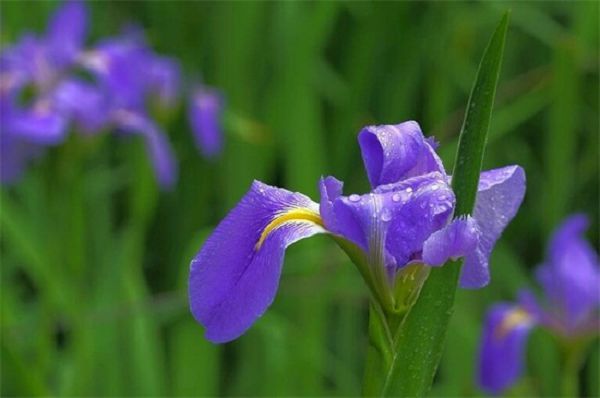
Orchid grass and orchid flowers are extremely similar, but they can still be distinguished in three ways. Orchid grass has oval or lanceolate leaves with small serrations along the edges, and its inflorescence is a capitulum; it refers to only two types of plants. Orchid flowers, on the other hand, have strap-shaped or oblanceolate leaves with smooth edges and a raceme inflorescence, and include all orchid species in the Orchidaceae family.
1. Different leaves
Orchid grass
The leaves of orchid grass and orchid flowers differ greatly. Orchid grass leaves are oval or lanceolate, about 6-12 cm long and about 3 cm wide, and its stems and leaves are very smooth, with only irregular small teeth distributed along the leaf edges.
Orchid flower leaves, however, are oblanceolate or broadly strap-shaped, unlike orchid grass leaves, and the leaves always grow at the joints on the lower half of the stem, arranged in two rows, with no small teeth along the leaf edges, making them relatively smooth.
2. Different inflorescences
Orchid flower
The seemingly similar orchid grass and orchid flowers also differ in their inflorescences. The inflorescence of orchid grass is a capitulum, growing at the tips of branches or the top of the stem; the inflorescence of orchid flowers is a raceme, with flowers and leaves growing opposite each other on both sides.
3. Different types
Orchid grass
There is also a difference in the types they include. Generally, orchid grass refers to Chinese orchids or the two plants known as rain lily (Zephyranthes candida) and pink rain lily (Zephyranthes carinata), while orchid flowers include a great many types, referring to all orchids in the Orchidaceae family.