How to water orchids right after transplanting? Water the settling-in water properly according to the different substrates
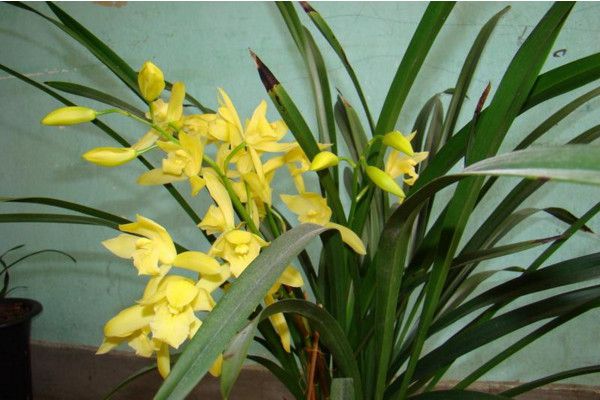
Orchids are rather delicate flowering plants, and every aspect needs attention during normal care. Right after transplanting, the settling-in water must be given according to the substrate: when the substrate has good air permeability and is relatively dry, water thoroughly immediately; if it is not dry, wait one day before watering. After that, care should focus on controlling light and temperature, and fertilizing in time.
I. Watering methods for newly transplanted orchids
Many people do not know how to water a newly transplanted orchid, but in fact only one point needs attention. If a relatively dry substrate with good air permeability and drainage is used, water thoroughly immediately after transplanting, that is, water until water flows out from the bottom of the pot; this is commonly called the settling-in water.
If the material is not dry and its air permeability is average, do not water immediately; wait one day and then water thoroughly. This is mainly to ensure the roots adapt to the soil in advance. Otherwise, if watered immediately, the roots cannot absorb it, which leads to water accumulation and root rot, harms growth after transplanting, and also affects subsequent flowering.
II. Care after transplanting
1. Light
Orchids prefer partial shade and must not be exposed to strong sunlight. Right after transplanting they are at their weakest, so place them in a cool, ventilated spot to adapt to the new environment. After about half a month, once growth is stable, move them into filtered light for care, to avoid problems such as sunburn and wilting.
2. Temperature
Controlling temperature after transplanting is very important. Orchids generally grow better between 15°C and 25°C, so try to keep the temperature within this range to safely get through the seedling-recovery stage. If in summer the temperature is above 28°C, spray water on the leaves to lower the temperature.
3. Fertilizing
Right after transplanting, it is best not to rush to fertilize. At this time the plant's roots are relatively weak and not yet well settled in the soil, and fertilizing immediately causes harm and is bad for growth. Wait until it has fully adapted and is growing well before applying additional fertilizer, and follow the principle of small amounts given frequently to avoid fertilizer burn.