What fertilizer is most practical for orchid care?
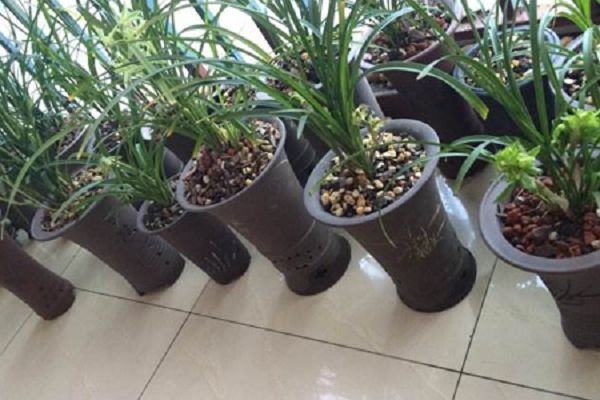
Shiitake mushroom soil has a moderate nutrient content and is slightly acidic. Its advantages are a long fertilizer effect period, strong water permeability and air permeability, and a good ability to retain water and fertilizer. You can also use grain husk charcoal, which mainly contains potassium; adding it to the mix can loosen the soil, help drainage, and also raise the soil temperature. Or bone charcoal, which is rich in phosphorus and has a fast fertilizer effect.
1. Shiitake mushroom soil
Shiitake mushroom soil has a moderate nutrient content and is slightly acidic. Its advantages are a long fertilizer effect period, strong water permeability and air permeability, and a good ability to retain water and fertilizer. Orchids grown with it have thick leaves, well-developed roots, and glossy, deep green leaves. Experiments have further shown that if it is used alone for planting, the widening and thickening of orchid leaves is even more obvious, especially for Cymbidium ensifolium.
2. Grain husk charcoal
Grain husk charcoal is alkaline when fresh, and after about 1 month of sun and rain it becomes neutral, at which point it can be used to plant orchids. It mainly contains potassium; adding it to the mix can loosen the soil, help drainage, and also raise the soil temperature.
3. Bone charcoal
Bone charcoal is relatively rich in phosphorus. Its advantages are a fast fertilizer effect and long-lasting fertility. Adding an appropriate amount to the mix can increase phosphorus fertilizer. When cultivating orchids, the following three can be used as fertilizers, which can make the leaves wider and thicker, the roots grow more vigorously, and the flowers bloom larger and more brightly.