Reasons and solutions for yellowing and dropping leaves on the crown of thorns (Euphorbia milii)
The crown of thorns, also called iron crabapple, is a sprawling shrub plant with many branches. The crown of thorns has high ornamental value and is commonly seen in shopping malls, parks and other places across China. In addition, its roots, stems and leaves have certain medicinal value, so it is loved by many people. However, when growing the crown of thorns, yellowing and dropping leaves often occur. So what should you do when the crown of thorns leaves turn yellow and drop? Let's take a look below!
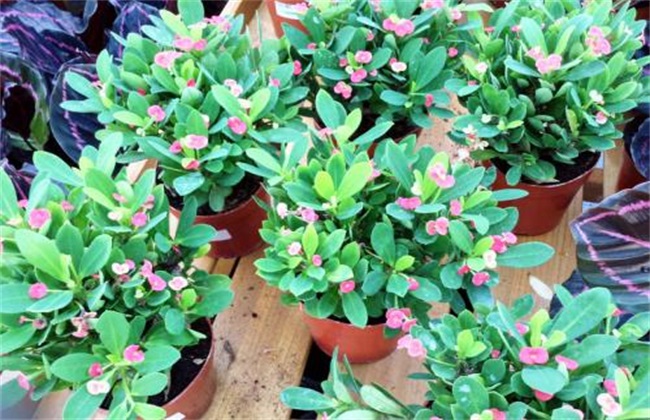
1. Drainage and root pruning
Before dealing with yellowing and dropping leaves on the crown of thorns, we must first understand clearly what is causing it. If it is caused by overwatering or being rained on, resulting in water accumulating in the soil, then it will cause root rot in the crown of thorns, which in turn leads to phenomena such as leaves turning yellow and dropping. So if this is the cause, then promptly take the whole crown of thorns plant out, check the roots, and cut off the rotted root parts. Then place it in carbendazim to disinfect, and let it dry before planting it in dry, clean soil. Usually also pay attention to doing good drainage work, focusing on prevention, to avoid water accumulating in the soil.
2. Strengthen ventilation
Yellowing and dropping leaves on the crown of thorns may also be caused by poor air circulation. Because if air circulation is poor, then the oxygen content indoors will decrease and air quality will worsen. This affects the respiration of the crown of thorns leaves, inhibits leaf growth, and causes the leaves to turn yellow and drop. Therefore we should pay attention to maintaining a growing environment with good air permeability and strengthen ventilation management. If the temperature is too low, then ventilation should be done on the premise of keeping warm. It should be done at noon or other times when the temperature is slightly higher, to prevent cold air from blowing in and causing the plant to be frostbitten.
3. Temperature control
Temperature is also a main cause of yellowing and dropping leaves on the crown of thorns. The crown of thorns likes to grow in a warm environment, and its cold resistance is very poor. If the temperature is too low, it will cause the plant to be frostbitten; in mild cases it will cause the leaves to turn yellow and drop, and in severe cases it may cause the plant to die. Therefore we should pay attention to controlling the temperature well, especially in winter, and do good cold protection and warmth preservation work. The temperature must not be lower than zero degrees, but in winter the crown of thorns will enter a dormant period, and leaf drop during the dormant period is also a normal phenomenon.
4. Light management
Light is also very important for the growth of the crown of thorns. Especially for the development of the crown of thorns leaves, the crown of thorns is a long-day plant. If there is insufficient light, then it will cause poor growth of the crown of thorns, affect the photosynthesis of the leaves, reduce the accumulation of photosynthetic substances, and thus cause the leaves to turn yellow and drop. Therefore we should pay attention to placing the crown of thorns in a place with sufficient light for care, but in summer pay attention to appropriate shading to avoid leaves being scorched by too strong light. In spring and autumn, the plant can be given full sun to ensure normal growth of the crown of thorns.
The above is a brief introduction to what to do when the crown of thorns leaves turn yellow and drop. That's all for today's introduction. This article is for reference only, and I hope it can be helpful to everyone!