How to store chemical fertilizer in winter? Methods and precautions explained at once
Chemical fertilizer is the nutrient food that keeps crops high-yielding, and many farmers use the idle winter time to store fertilizer. Some people think that because winter is cold and temperatures are low, fertilizer will not volatilize. In fact, fertilizer does not stop volatilizing in winter; compared with the hot season, it simply volatilizes more slowly and in smaller amounts. So how should you store chemical fertilizer in winter? What should you pay attention to? Let's take a look together.
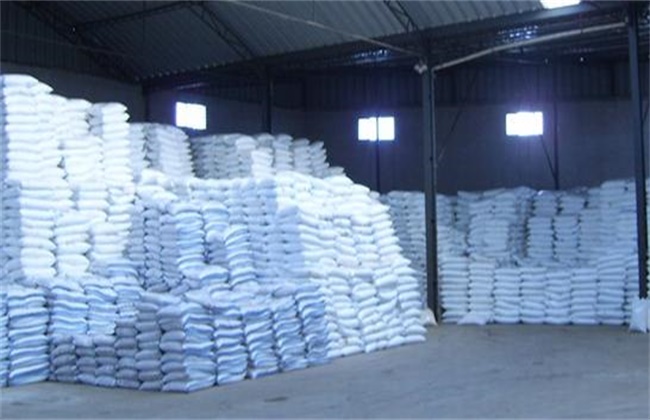
I. Storage methods
1. Store sealed
Many nitrogen fertilizers, such as ammonium sulfate, ammonium bicarbonate, and ammonium nitrate, are unstable in nature, so during storage they easily decompose and volatilize, reducing fertilizer efficiency. Therefore, these fertilizers should be stored in airtight plastic bags or other sealed, corrosion-resistant containers.
2. Get the stacking height right
When storing fertilizer, the quantity is relatively large, but farmers should pay attention to the height when piling it up. Generally, it should not exceed 2 m, and the time should not be too long either, as this will cause the fertilizer to cake. By the time it is applied, it will be very difficult and the effect will be hindered.
3. Avoid volatilization
Chemical fertilizers all have a certain corrosiveness, especially strongly acidic and strongly alkaline fertilizers, whose corrosiveness is even greater. Therefore, when storing them, farmers must be sure to avoid long-term contact, and even more so must not store them together with feed, as this can cause poisoning.
II. Precautions
1. Prevent volatilization loss
Among chemical fertilizers, ammonium bicarbonate is an unstable compound that easily decomposes on its own into ammonia, carbon dioxide, and water, causing loss of nitrogen. The higher the temperature, the faster it decomposes. Therefore, it must be sealed firmly during storage. Plastic bag packaging must not be damaged. When storing ammonia water, a layer of waste engine oil can also be added to prevent ammonia volatilization. Nitrogen fertilizers and superphosphate must strictly not be piled together with lime, plant ash, calcium magnesium phosphate fertilizer, and the like.
2. Prevent moisture absorption and caking
Most solid chemical fertilizers are hygroscopic, and some cake and deteriorate after absorbing moisture. For example, ammonium bicarbonate easily absorbs moisture, causing ammonia volatilization loss; potassium chloride is hygroscopic and easily forms lumps when damp; ammonium nitrate easily cakes and deliquesces when it absorbs moisture. Before storage, first use bricks, wooden boards, or other materials to raise it off the ground to prevent moisture and water.
3. Prevent fire, heat, and sun exposure
Nitrogen fertilizers volatilize faster when exposed to sunlight or high temperatures. For example, fertilizers such as ammonium nitrate and potassium nitrate are flammable and explosive. During storage, strictly guard against fire and smoke, violent collisions, and direct sunlight, and do not collide them with oil or pile them together with flammable materials such as firewood and sulfur, so as to avoid explosions and fires.
4. Prevent corrosion and poisoning
Chemical fertilizers are more or less corrosive to some degree, and during storage they volatilize an irritating odor that is toxic and harmful to the human body. Long-term direct contact should be avoided, and they absolutely must not be stored together with food or feed, so as to avoid poisoning people and livestock.
The above is an introduction to winter chemical fertilizer storage methods and precautions. I hope it can help you. To learn more related knowledge, please keep following us.