What causes yellowing leaves on plumeria?
Plumeria is a deciduous shrub or small tree in the Apocynaceae family, with high ornamental value. As a potted plant, it is very popular in China, and plumeria is also a traditional Chinese medicine, with effects such as clearing heat and relieving summer heat, and moistening the lungs and throat. Therefore, quite a lot of people now grow plumeria, but during growth, plumeria often shows yellowing leaves. So what causes yellowing leaves on plumeria? Let's take a look together below!
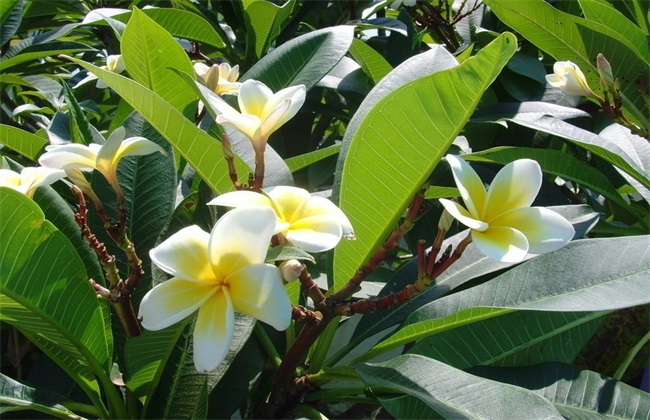
1. Too much fertilizer
Although plumeria has a relatively high demand for fertilizer, when fertilizing we need to pay attention to controlling the amount applied. If too much fertilizer is applied or the concentration is too high, it can easily cause fertilizer damage, root burn and other adverse phenomena in plumeria. Then the absorption of nutrients by plumeria is hindered, and the leaves lack nutrients, resulting in yellow leaves. Therefore, if too much fertilizer has been applied, pay attention to watering promptly to dilute the fertilizer. Or change the soil, and also pay attention to controlling the fertilization position to avoid the roots contacting the fertilizer and being burned.
2. Improper watering
Improper watering is also a main cause of yellowing leaves on plumeria. Too much watering will cause water accumulation in the soil, affecting root absorption and leading to root rot in plumeria leaves. This causes plumeria leaves to turn yellow and wilt, but water should not be too little either. If not watered for a long time, the leaves will lack water and quickly dry up and turn yellow. Therefore, when watering, we should follow the principle of watering when the soil is dry and stopping when it is wet. Control the amount of watering according to the actual conditions of the soil and the plumeria, and do not water blindly.
3. Light reasons
Plumeria likes to grow in an environment with sufficient light. Its demand for light is also relatively high. In an environment with sufficient light, plumeria has a stronger growth capacity. The floral fragrance is also relatively rich, but if it grows in a shaded environment for a long time, it will affect photosynthesis in plumeria. This reduces the accumulation of photosynthetic substances, and the leaves will gradually turn yellow due to a lack of chlorophyll and so on. Therefore, we should pay attention to controlling light well, especially in winter and other situations where natural light is insufficient, and pay attention to doing a good job of artificial supplemental lighting.
4. Pest and disease control
When plumeria leaves show yellowing, softening and other phenomena, in addition to the above reasons, it may also be caused by pests and diseases. We should observe whether the leaves have other symptoms or whether pests are present. If so, promptly identify the cause and then carry out prevention and control to prevent the condition from spreading. Every month, regularly spray insecticides and fungicides, and pay attention to doing a good job of ventilation, control humidity well, and after pests and diseases occur, carry out targeted control.
The above is a brief introduction to the causes of yellowing leaves on plumeria. That is all for today's introduction. This article is for reference only, and I hope it can help everyone!