Reasons for Yellowing Leaves on Poinsettia and How to Fix Them
Poinsettia is a shrub plant in the Euphorbiaceae family, cultivated in most parts of China. It is generally fairly common in various gardens and parks, and has high ornamental value. Its stems and leaves can also be used medicinally, with many medicinal effects. It is welcomed by many people, but when growing poinsettia, yellowing leaves are a frequent occurrence. So what causes yellowing leaves on poinsettia? Let's take a look below!
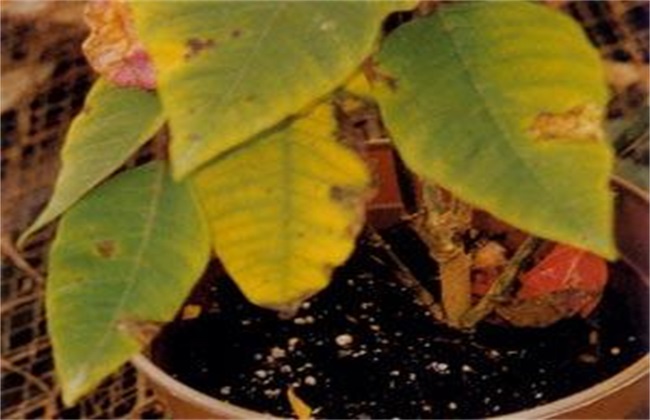
1. Too much light
Poinsettia has a certain demand for light, and during its growth, suitable light is very beneficial to its growth. But we must also pay attention to controlling light intensity, because if the light is too strong, especially if shading work is not done well in the strong-light season of summer, then poinsettia leaves are very easily scorched by the sun, and the high temperature and dryness cause the leaves to lose water too quickly, leading to yellowing and leaf drop. Therefore, when growing poinsettia, we should pay attention to maintaining a suitable light environment. In summer, do a good job of shading and spray water appropriately to raise air humidity.
2. Temperature too low
Poinsettia likes to grow in a warm environment and has very poor cold tolerance. Its suitable growth temperature is about 18 degrees, and even at night in winter it needs a temperature above 15. If the temperature is below 5 degrees, then the leaves will turn yellow because of the too-low temperature. However, the temperature should not be too high either; too high a temperature will cause poinsettia leaves to lose water too quickly, and also easily cause yellowing and leaf drop. Therefore, we should control the temperature well, do a good job of heating and keeping warm in winter, and not let the poinsettia plant be exposed to direct cold wind. When the temperature is too high, cool it down appropriately and spray reasonably to ensure normal growth of the poinsettia.
3. Overwatering
Although poinsettia has a relatively high water requirement and likes to grow in a relatively moist environment, we still need to pay attention to controlling the amount of watering, and must not water too much. If water accumulates in the soil, it will inhibit root respiration, affect nutrient absorption, and also easily cause root rot. And many factors will thereby cause poinsettia leaves to turn yellow. So we should pay attention to controlling the amount of watering and not give too much. Adjust reasonably according to seasonal changes; for example, in spring, watering about once every three days to keep the soil moist is enough. In summer, water about once a day and spray water appropriately around the plant.
4. Improper fertilisation
This variety has a relatively large demand for nutrients during growth, so when growing poinsettia we still need to do a good job of fertilising. In particular, pay attention to supplementing poinsettia with sufficient trace elements, because if fertilisation is improper and the nutrient ratio in the fertiliser is unbalanced, then poinsettia leaves will also show leaf drop and yellowing. Therefore, every year when we repot the plant, we should pay attention to applying an appropriate amount of base fertiliser. After each pruning, some dilute fertiliser water can be appropriately applied as a top dressing, providing sufficient nutrients for the growth of the poinsettia.
The above is a brief introduction to what causes yellowing leaves on poinsettia. That's all for today's introduction. This article is for reference only, and I hope it can help everyone!