What are the ventilation and dehumidification methods for chicken coops in winter?
There is a common problem in raising chickens in greenhouse coops in winter that everyone needs to pay attention to, and that is dehumidification. Winter temperatures are relatively low, and if the chicken coop is not ventilated, the humidity inside the greenhouse will be heavy, making it very easy for bacteria to breed. So how should chicken coops be ventilated and dehumidified in winter? Let's find out together.
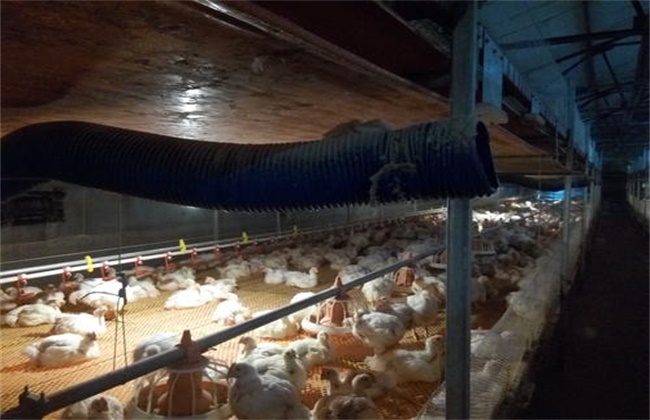
1. Ventilation
Many people do not do this properly in winter. Ventilation is the most effective method of dehumidification, promptly expelling moisture out. However, when ventilating, attention must also be paid to keeping warm. If you only ventilate without paying attention to warmth, the temperature in the chicken coop will drop sharply, causing the flock to become uncomfortable. The ventilation time should be chosen at noon when the temperature is higher, and at the beginning of ventilation it should be slightly less, so that the flock can slowly adapt. If all the vents are opened at once from the start, the huge temperature difference will cause the flock to have a stress reaction.
2. Dehumidification equipment
If the chicken coop has the conditions, some dehumidification equipment can be installed, which is better than simple ventilation. For example, some air conditioners can be installed. This method is very effective, but the upfront capital investment will be relatively high. Farmers can, according to their own actual situation, appropriately set up some heating equipment, plus moderate ventilation, and this can also play a dehumidifying role, and the upfront investment is also relatively small.
3. Ground dehumidification
When the air humidity is relatively high, the ground of the chicken coop is also very damp. When the flock is resting, be sure to spread a layer of straw, or set up a layer of wooden boards, so that the flock does not come into direct contact with the ground. This way there is less moisture, and it is also healthier for the growth of the flock. In addition, some quicklime can also be scattered on the walkways, which is also very good for dehumidification. In addition, some dry fine soil can also be scattered, which can also play a dehumidifying role. Some hygrometers can be hung inside the chicken coop, hung in several places, so that the humidity in the chicken coop can be monitored in real time, and when it is too high, dehumidification work can be done promptly.
4. Laying film on the greenhouse roof
Although the temperature in winter is very low, the temperature inside the greenhouse will still be somewhat higher relatively speaking. In that case, some water droplets will form on the greenhouse roof. This is common knowledge in daily life, and everyone surely knows it too. When the water droplets gather and become larger, they will slowly drip down, causing the ground to become damp. So a layer of film can be laid on the greenhouse roof. When the water droplets drip down, they can be directed to other places, and will not drip onto the chickens and the ground.
The above is an introduction to the ventilation and dehumidification methods for chicken coops in winter. We hope it can help you. If you want to learn more related knowledge, please stay tuned to us.