How to grow orchids? A detailed guide to care methods for each growth stage
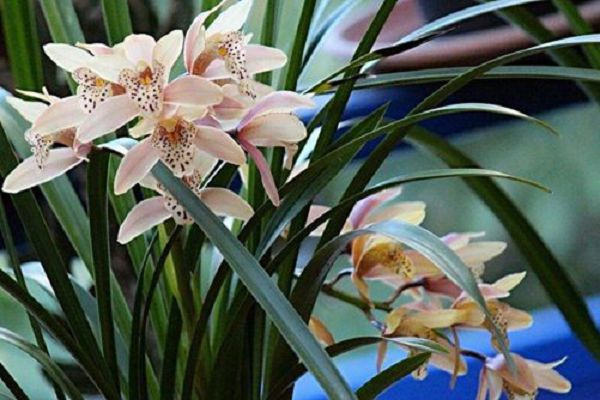
In fact, if we want to cultivate good orchids, we must observe carefully, identify and grasp their growth patterns at each growth stage, and carry out scientific management according to local conditions. How to grow orchids? Below, the editor shares with you knowledge on caring for orchids at each growth stage.
I. Care during the sprouting stage
The sprouting stage of orchids is generally in April and May, just when spring returns to the earth, with continuous overcast and rainy weather, and when there is no rain, there is early fog. Therefore, during this period, in addition to maintaining humid air, moderate temperature, and moist soil to facilitate the normal growth of orchids, what is more important is to prevent the pot from being constantly waterlogged all day, which damages roots and rots buds and gives rise to diseases. In the north, attention should also be paid to avoiding dry wind attacks and cold current damage. Dry fertilizer should also not be applied during this period, and concentrated fertilizer is even more taboo, because the sprouting period is also the time when new root systems of the orchid plant are stirring. If concentrated fertilizer is applied, it is easy to burn the new root system; in mild cases it affects the normal growth of the plant, and in severe cases it can cause the plant to die.
II. Care during the leaf-unfolding stage
At this time the orchid leaves have already unfolded and can carry out photosynthesis. The orchid plant is more full of vitality and energy than at any other time, so the intensity of light should be appropriately increased, and along with watering, some dilute liquid fertilizer should be applied, usually once or twice a month as the
degree. When the climate is dry, the leaf surface can also be misted to lower the temperature and increase air humidity. However, it is worth noting that this period is also a time of high disease incidence for orchids. When watering, grasp the principle of watering when dry and watering thoroughly when watering. When misting in the evening, it should be done appropriately, and the mist droplets must never be left on the leaf surface and buds overnight, otherwise it will induce disease. To prevent disease, in addition to paying attention to ventilation and light transmission, thiophanate-methyl, chlorothalonil, and other drugs can also be used monthly to spray the front and back sides of orchid leaves once or twice.
III. Care during the bud-development stage
There are many types of orchids, and their bud-development stages also differ. But in general, special attention should be paid to light and ventilation. During the bud emergence stage, soil that is too dry or too wet in the pot will cause flower buds to wither or affect the quality of flowering. Check every day,
pay attention to changes in climate temperature and changes in the dryness and wetness of the potting soil, and promptly carry out corresponding care. Especially when watering, do not let pot mud and water touch the flower buds, to prevent the flower buds from rotting and dying.
IV. Care during the flowering stage
During the flowering period, orchids should have their light appropriately restricted, and strong sunlight is especially taboo, otherwise the flowers will look aged and listless, or shrivel and dry up. It is best to move the flowering orchid plant to a place with scattered light and ensure good ventilation, which will make the flow
ers look lovely and charming. In addition, during this period, prevent the soil from being too dry or too wet, and also be careful not to apply fertilizer. Fertilizing at this time will make the flowers fade early and shorten the flowering period.
V. Care after the flowering period
Many people apply fertilizer to replenish nutrients right after the flowering period, which is wrong. Generally speaking, after flowering, the physiological activity of the plant in all aspects will decrease to varying degrees, and it is not suitable to fertilize immediately. At this time, the orchid pot should be moved to a place with sufficient sunlight, and it is enough to keep the potting soil moist, until around the sprouting period of the following year before fertilizing again.