The orchid needs watering, how should you tell
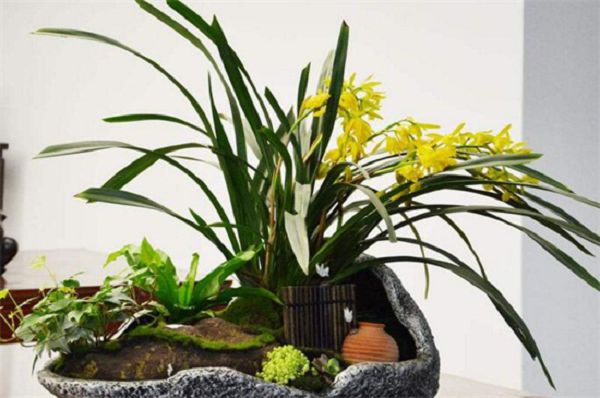
Proper moisture promotes the growth and development of orchids. When watering, you can commonly use the bamboo skewer method, the weighing method, the comparison method, and the soil-poking method to judge whether an orchid needs watering. During watering, it is best to use rainwater or river water, and in late winter and early spring, simply spray a mist of water on the leaves.
1. Methods for judging when an orchid needs watering 1. Bamboo skewer method
During orchid cultivation, if the moisture is reasonable the plant will grow luxuriantly. So, first we can use the bamboo skewer method: insert a bamboo skewer into the edge of the pot, then wait about 3 minutes to see whether the skewer is dry or wet. If it is wet, there is no need to water; if it is mostly dry, that means it is time to water.
2. Weighing method
The weighing method can also be used to judge whether an orchid needs watering. Generally, after watering the potted soil weighs a little more. Mainly weigh the potted soil before watering, then compare it with the weight of the soil after watering. If it is heavy enough, there is no need to water; if it is too light, that means it is time to water promptly.
3. Comparison method
The comparison method is also the best way to judge whether an orchid needs watering. Mainly, prepare two identical flower pots, then use the same soil and the same orchid variety to plant them together. Finally, tip both pots out to check the degree of water absorption in each. If one is on the dry side, it needs watering.
4. Soil-poking method
The soil-poking method is the best way to judge when to water an orchid. Mainly, loosen the soil in the orchid pot, then poke aside the soil to a depth of 4-5cm and check whether the inside is on the dry side. If it is on the dry side, it needs watering; if the potted soil is moist and muddy, there is no need to water.
2. Precautions for watering orchids
When watering orchids, it is best to keep the potted soil on the drier side. During the flowering period, water less often and do not use too much water. In summer, it is best to give a light watering once in the morning and once in the evening. In autumn, you can appropriately reduce the number of waterings. In hot, dry seasons, it is suitable to spray a mist of water around the plant every day.
Also, when watering, it is best to water along the edge of the potted soil, and remember never to pour water directly into the middle. Before winter arrives, just water thoroughly once, and the water is best as rainwater or river water. In late winter and early spring, also appropriately spray a mist of water on the leaves to maintain a certain humidity.