Can orchids that have not yet adapted to their pot be kept outdoors?
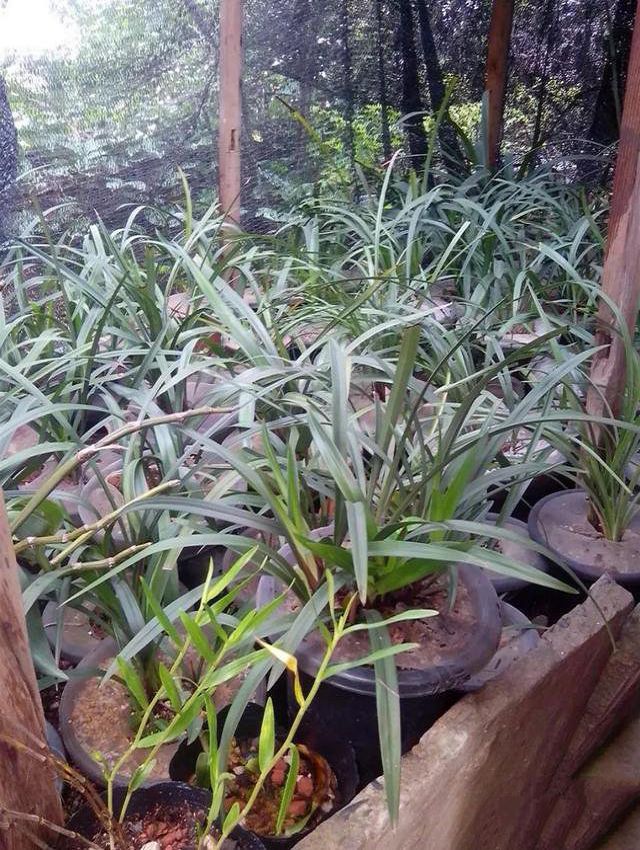
In the practical work of growing orchids, we often repot and divide them in autumn. Sometimes, due to special circumstances, we plant orchids and pot them up very late in autumn, or even in winter. Because winter temperatures are relatively low, after potting up an orchid it may take a very long time before it adapts to its pot. So, can these orchids that have not yet adapted to their pot be kept outdoors?
First of all, this question depends on the region. We know that after potting up, an orchid needs suitable temperatures and growing conditions to adapt to its pot and grow as quickly as possible. Therefore, orchids planted and potted up in winter should be given temperatures and conditions as close as possible to those suitable for their growth. For this reason, the temperatures and conditions in southern regions are closer to what orchids need for natural growth. So in most parts of the south, orchid plants potted up in winter can be kept outdoors.
For example, in Hubei and Hunan. Even when cold waves occasionally pass through, the temperature drop is not very great and does not last very long. Because of the geography, the air humidity is relatively high. By and large, this will not have much effect on the orchids.
In northern regions, however, winter is usually relatively dry and cold, and nighttime temperatures are often minus ten degrees, or in the teens below zero (North China), or even lower. This is simply not suitable for keeping orchids outdoors. Even the relatively cold-hardy cymbidiums and Chinese orchids (Cymbidium goeringii) should be moved into an ordinary low-temperature indoor space for care.
Of course. Other orchid groups such as the four-season orchid (Cymbidium ensifolium) and the Chinese cymbidium (Cymbidium sinense) should certainly be moved into an environment with somewhat higher temperatures for care. The relatively suitable temperature should be around 15°, and temperatures that are too low or too high are not very beneficial for the four-season orchid, the Chinese cymbidium and others. Therefore, Chinese orchids (Cymbidium goeringii) and cymbidiums should be placed in an environment at about 0-10° for normal low-temperature vernalization. Meanwhile, other orchid groups such as the four-season orchid and the Chinese cymbidium should be placed in an environment at around 15° and left to enter dormancy or grow freely. This is the relatively reasonable method of winter care and management for orchids.