How to improve urea utilization rate? These methods you need to master
Urea is the fertilizer with the highest nitrogen content among solid nitrogen fertilizers. It has high fertilizer efficiency and is convenient to use, and can be used as both a base fertilizer and a top dressing. However, waste during the use of urea is quite serious. As the highest-quality nitrogen fertilizer at present, the utilization rate of urea is generally only about 50%. So is there any way to improve the urea utilization rate? Let's take a look together.
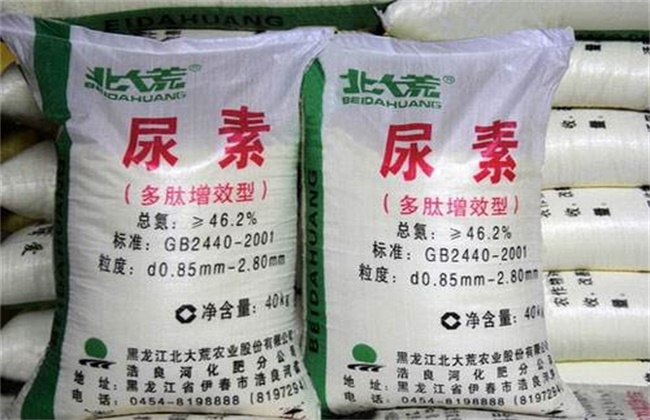
I. Factors affecting the absorption of urea
1. Soil pH
Soil pH affects the transformation of urea in the soil. The transformation rate of urea in neutral soil is clearly greater than in acidic or alkaline soil, because neutral soil is more suitable for microbial activity.
2. Soil fertility level
Urease can promote the transformation rate of urea, and fertile soil contains a high level of urease, so fertile soil will accelerate the transformation of urea.
3. Soil temperature
Soil temperature also affects the transformation rate of urea. When the soil temperature is around 10 degrees, urea needs 7-10 days to complete transformation; when the soil temperature is above 20 degrees, it takes only 4-5 days; and when the soil temperature is above 30 degrees, the transformation time is only 2 days.
4. Soil moisture
When there is more soil moisture, the hydrolysis effect of urease is extremely strong. According to experimental research, at 25-30 degrees, when soil humidity is 70%, urea applied can be transformed in just one day, and 28% of the urea transformed into ammonium nitrogen is absorbed by crops. Conversely, when soil moisture is insufficient, urea transformation will be very slow.
II. Methods to improve urea utilization rate
1. Deep application
Whether urea is used as a base fertilizer or as a top dressing, it should be applied deeply and covered with soil. The fertilization depth should preferably be 10-12 cm. Doing so can significantly improve the fertilizer utilization rate. According to research, when urea is applied shallowly at 2-3 cm, the utilization rate is only 30%; when the fertilization depth is 5 cm, the utilization rate is about 45%; if applied deeply at 10-20 cm, then the utilization rate can reach 65%.
2. Early application
Urea belongs to amide nitrogen fertilizer. After being applied to the soil, it cannot be directly absorbed and utilized by the soil. It needs to be transformed into ammonium nitrogen under the action of urease in the soil before it can be absorbed by crop roots. If fertilization is too late, it will not only be unfavorable for the fertilizer effect to be exerted, but may also cause delayed maturity and excessive vegetative growth.
3. Spray application
The molecule is small in size and extremely easy to be absorbed by leaves, so urea is also the most suitable chemical fertilizer for foliar spraying. Foliar spraying has a fast absorption speed, is not affected by the soil environment, has a high utilization rate, and requires a small amount of fertilizer, but the yield-increasing effect is obvious. Especially in the late growth stage, the absorption capacity of the root system weakens, but the plant crops have a large demand for nutrients, which can easily cause premature aging of the plant. At this time, foliar spraying can solve this very well.
4. Mixed application
Mixing urea with organic fertilizer, phosphorus and potassium fertilizer, and trace elements can not only maintain soil nutrient balance, but also improve the fertilizer utilization rate, with an obvious yield-increasing effect.
The above is an introduction to how to improve the urea utilization rate. I hope it can help you. If you want to learn more related knowledge, please follow us.