Can you water orchids frequently in summer? There is more to the care method than meets the eye
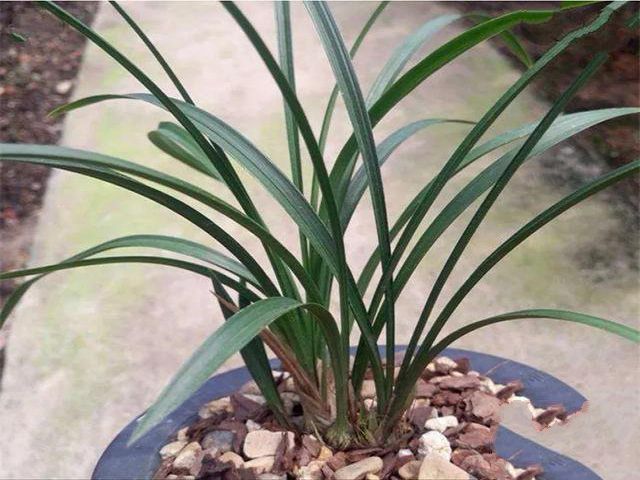
For any plant or flower to grow and thrive smoothly and pass safely through spring, summer, autumn and winter year after year, suitable moisture is naturally indispensable. As for whether orchid plants can be watered frequently in summer, it mainly depends on the orchid's growing environment and the material mix ratio of the potting medium used to plant the orchids.
In summer, temperatures are high, evaporation from the orchid's leaf surfaces and inside the pot is great, and the orchid plants grow relatively fast, so the orchids' water demand is somewhat greater than in other seasons. Therefore, giving orchid plants a bit more water is very necessary. But this frequent watering has a certain moderation in actual practice. It must be considered from many aspects according to the actual humidity of the orchid-growing environment, the weather conditions and the proportional mix of the potting medium materials.
One, the environmental humidity of the orchid-growing area. Usually, the environmental humidity of the orchid-growing area is much higher than that of normal places, which is quite suitable for orchid plant growth; when environmental humidity is high, orchids will grow as usual even if the inside of the pot is relatively dry. But sometimes, due to various reasons, the humidity of the orchid-growing environment is relatively low, and the orchid roots cannot absorb water from the air, so orchid growth will be hindered; at this time you must water inside the orchid pot to supply the orchid plants' normal growth needs. At the same time, you can also increase the amount of water sprinkled on the ground, so that the humidity of the orchid-growing environment rises in step.
Two, the materials used for the growing medium and their mixing ratio. The potting medium for planting orchids is usually made by combining materials that are relatively loose and breathable, drain well, and also have a certain water-absorbing function. However, because each orchid grower differs in region and in the habit of mixing orchid potting medium, the materials used, the mixing ratios and the particle sizes are all different. Potting media mixed in this way require different watering frequencies. For example: if you use fermented, fully rotted pine bark and Kanuma soil (Kiryu stone) mixed in ratios of 3:1 and 1:1, the 3:1 mix contains more pine bark, so its water absorption and the lasting moisture retention of the material will certainly be greater than the 1:1 mix, and the moisture retention will last longer. Therefore, potting medium mixed at 1:1 needs to be watered more frequently. Orchids planted in medium mixed at 3:1 can wait another three or two days before watering.
Three, the issue of potting medium particle size. For the materials used to plant orchids, whether soft potting medium or hard potting medium, a particle size of generally around 0.3 to 1.5 cm mixed together for use is fine; there is no need to separate them by size. However, when many orchid growers plant orchid seedlings, some use potting medium with a relatively small particle size, around 0.5 to 0.8 cm. Whichever material it is, the particle size is on the small side, and its breathability and drainage are much worse, so in this case the frequency cannot be too high. And some orchid growers, when planting orchids, use some large-particle materials, and there is relatively little soft potting medium such as bark, so its water absorption becomes smaller and the lasting moisture retention also becomes shorter. In order not to affect the normal growth of the orchid plants, the watering frequency must be increased somewhat. When the potting medium has poor water absorption and strong breathability, you need to water frequently. Watering frequently is what helps the orchid root system grow, and the water that drains out of the pot can also increase the air humidity of the environment. Therefore, whether orchid plants need frequent watering in summer, the material and particle size of the potting medium are also especially important.
Four, decide the watering frequency according to weather conditions. For orchids grown outdoors in a shaded environment, the watering frequency should be decided according to weather conditions. During long periods with no rain and dry conditions, you can appropriately water the orchids more frequently, and you should often sprinkle water on the ground to increase environmental humidity. In continuous rainy weather, not only should you stop watering the orchid plants, but when necessary you should also do a good job of protecting the orchid plants from rain.
Therefore, watering orchids in summer is decided according to the above basic conditions that must be met. It is not that watering at random benefits the orchids. Water is the source of life, but when there is too much water it will cause the orchid root system to suffer and rot, and when there is too little it will make the roots shrivel and inhibit plant growth. In short, the watering frequency for orchids must be decided according to the actual conditions of the humidity of the orchid-growing environment, the material mix of the growing soil and the particle size, and the weather, humidity and temperature.