How to plant orchids with Japanese Kanuma soil? Different environments have different requirements
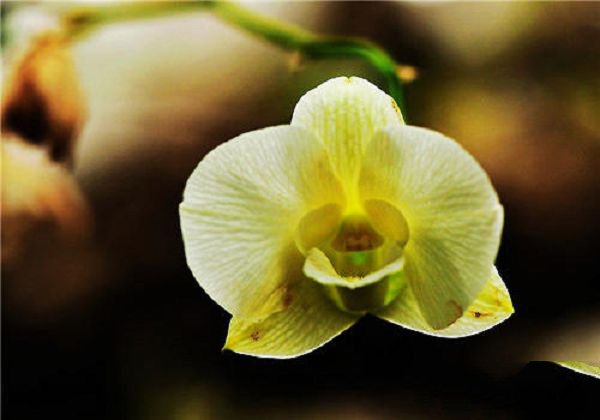
Orchids are a very popular flower variety in our country, and if you want to grow orchids well, the medium is relatively important. If you use Japanese Kanuma soil, there will be different planting methods in different environments. The editor will introduce to you how to plant with Japanese Kanuma soil in humid and dry environments.
Orchid
1. Humid environment: greenhouses, places with humidifiers, mountains, areas with woods, etc. If moss is seen in the environment, it all belongs to the above environments. If it does not get rained on, Kanuma soil can be used in a large, medium, small arrangement (from bottom to top) for planting (a pot with holes can be chosen). This planting method is the general method. Its advantage is good aeration. Because the environment is humid, the roots have a tendency toward moisture, so they grow well.
2. Dry environment: strong wind, strong sunlight, high temperature, fast water evaporation, such as balconies and rooftops. If it will get rained on, the planting method is completely opposite to that in a humid environment, that is, a pot without holes should be used, and the arrangement order of Kanuma soil is small, medium, large (from bottom to top). However, the disadvantage of this planting method is poor aeration and the plant will sway, so a pearl milk tea straw with holes punched all around should be inserted into the pot, and a very thin layer of sphagnum moss should be laid on the pot surface, and the sphagnum moss should be pressed tightly against the pot rim to prevent the plant from swaying. Why plant it this way? The reasons are as follows:
1. Because roots have a tendency toward moisture, if Kanuma soil is arranged as large, medium, small (from bottom to top), the dry and wet condition of the water is dry at the bottom and wet at the top, because large stones absorb water slowly and dry quickly, while small stones absorb water quickly and dry slowly, and the environment outside the pot is dry, so when growing orchids on a balcony, it is often found that orchid roots are on the surface of the pot (because the pot surface has sphagnum moss or fine stones and is relatively moist), so the roots naturally grow upward and cannot extend downward. Therefore, the planting method naturally differs in different environments.
2. In the first planting method, the orchid stones go from small to large. If it gets rained on, the upper half of the pot will form water retention because of the small stones. During one month of the plum rain season, the orchid roots will be soaked and rotted, so no matter how the orchids are planted, they cannot be grown well. This is also why, after orchids are bought back, if they are not repotted according to the environment, they will rot at the roots and die.
3. Therefore, for different environments (use coarser material if it will get rained on, and finer material if it will not get rained on), first choose a suitable pot (use a pot with holes in a humid environment, and use a pot without holes in a dry environment), then choose suitable material (use finer material for a pot with holes, and use coarser material for a pot without holes), taking into account aeration (drainage), the dry and wet condition of the material in the pot, whether it dries from top to bottom, that is, the bottom of the pot should be wet, and because materials differ, consider how to water and fertilize, then the orchids will naturally grow well.